Thirty-two miles is short enough that most people do not plan a stop and long enough that plenty of them want one anyway: a meeting in the middle, a break with kids in the car, a meal that is not at either downtown.
The useful thing about this corridor is that the midpoint is not empty highway. It is Arlington and Grand Prairie, two substantial cities sitting almost exactly halfway. Corridor overview: Dallas to Fort Worth traffic guide.
The halfway point
The geographic midpoint of the I-30 run sits in the Arlington / Grand Prairie area, roughly 15–16 miles from either downtown. If you and the person you are meeting start from the two downtowns, an Arlington location splits the drive close to evenly. Off-peak, both of you get there in about twenty minutes.
Stops by purpose
A quick meal without leaving the corridor
I-30 through Arlington and Grand Prairie has the highest density of drive-through and fast-casual options on the route. Exits near the entertainment district and along the main arterials crossing I-30 have clusters within a minute or two of the freeway.
Timing matters more than the brand. If there is an event at AT&T Stadium or Globe Life Field, these same exits are the ones backing up. A stop that takes eight minutes on a Tuesday can take thirty on a game night. For food on a Dallas-only drive, see where to eat driving through Dallas and restaurants on my route.
A sit-down meal
Both cities have sit-down districts a mile off the frontage road. That five-minute detour is right for a business lunch and wrong for a mid-commute refuel.
A break with kids
Six Flags works when you have real time. For a short break, municipal parks in Arlington and Grand Prairie are closer to the corridor and less chaotic than the stadiums.
Fuel
Fuel is plentiful across the midsection. Prices generally run lower at Grand Prairie and Arlington exits than at the downtown ends, which is a small but real reason to fill up mid-route rather than before you leave. See also gas stations along my route.
Truck stops and long-haul services
Full truck-stop facilities are sparse on urban I-30. Use I-20 to the south for long-haul services, or stop before or after this 32-mile segment. Related: rest stops and truck stops along my route.
The event-day warning
This is the single most useful thing on this page.
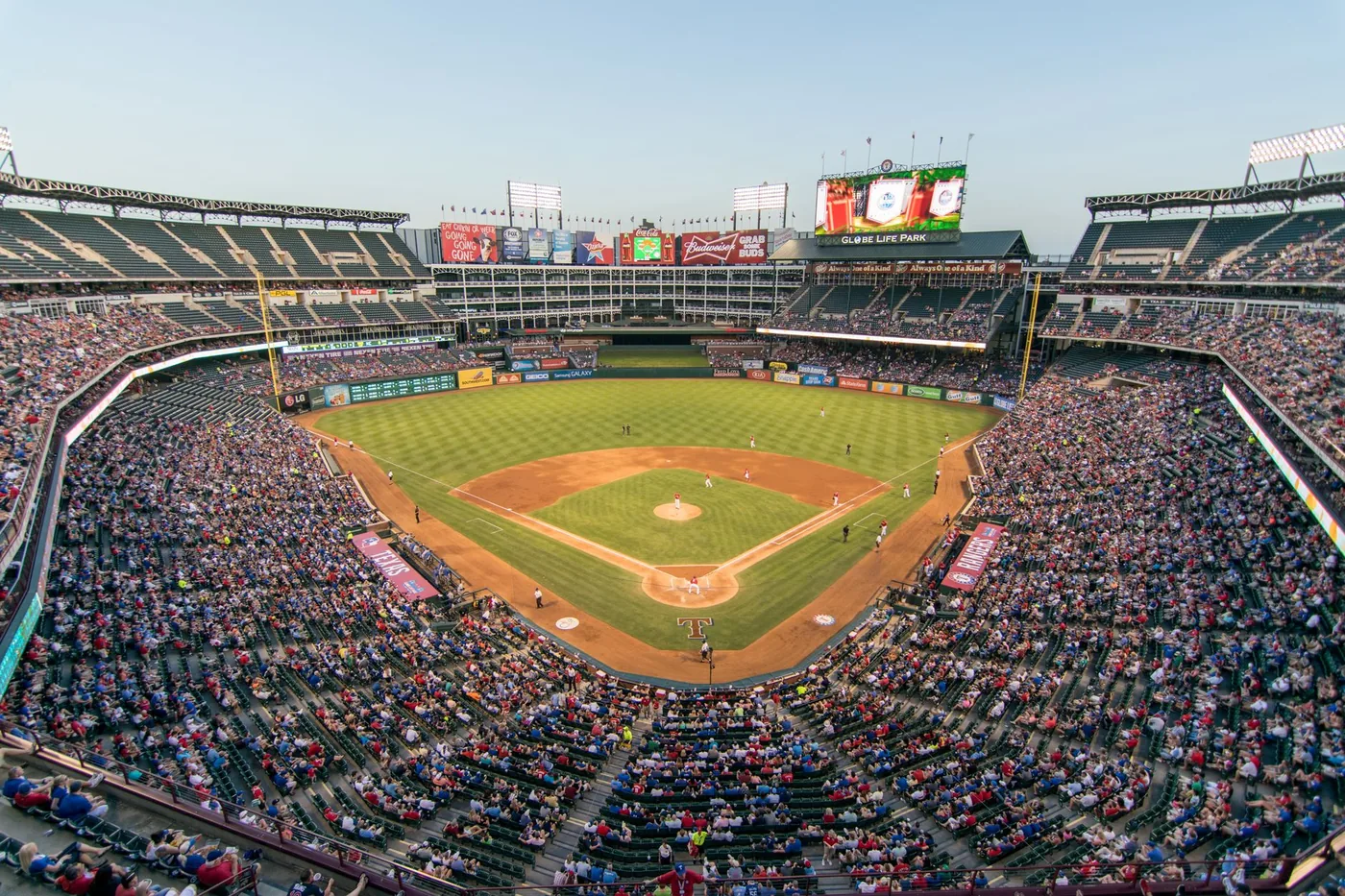
The Arlington entertainment district (AT&T Stadium, Globe Life Field, Six Flags) sits directly on the corridor's midpoint. On event days, traffic loads onto I-30 in a two-to-three-hour window before start time. The Collins Street and Ballpark Way exits move at walking pace. TxDOT and TTI already list nearby I-30 segments (including E. Loop 820–SH 360) among Texas's most congested roads, so an event day is stacking onto a corridor that is already on the statewide Top 100.
That means the exact exits you would use for a midpoint stop are the exits that fail first. A planned ten-minute stop can become a forty-minute one, and getting back onto the freeway afterward is often slower than the stop itself.
On event days, either stop before you reach Arlington, or take I-20 and stop in south Arlington or Grand Prairie instead. Checking stadium schedules before a mid-route stop takes thirty seconds and is the difference between a break and an ordeal. Route choice: I-30 vs I-20 vs SH 183.
Stops on the alternative routes
I-20 (southern): more spread out, less dense, reliably less congested. Better for truck services and for anyone who wants a stop that will not be wrecked by an event. The extra eight miles of route length buy you a calmer stop.
SH 183 / SH 121 (northern): runs through Irving along the northern airport highway. Better for hotel meetings and Irving / Las Colinas errands, not for a downtown-to-downtown lunch. Do not treat it as a midpoint food stop for the I-30 trip.
Cost of stopping, by time of day
A stop costs more than the minutes you spend parked. Rejoining I-30 during a peak period can take several minutes on its own, and it puts you back into traffic at a worse point in the flow. Pattern estimates:
- Off-peak (10:00 a.m.–2:00 p.m.): a stop costs roughly what it looks like it costs.
- Peak (7:00–9:00 a.m., 4:00–6:30 p.m.): add 5–10 minutes for the rejoin.
- Event window: the number is unpredictable. Assume the stop can cost more than the rest of the drive.
If you have any flexibility, a stop is cheapest in the midday lull, which happens to be the cheapest time to make the whole drive anyway. See best time to drive Dallas to Fort Worth.
Before you leave
The right exit depends on what is open, what is backed up, and whether the stadium is full. BoardSpy shows food and fuel along your actual Dallas–Fort Worth route and flags exits to skip when an Arlington event is loading.
Frequently asked questions
Where is halfway between Dallas and Fort Worth?
The I-30 midpoint sits in Arlington and Grand Prairie, roughly 15–16 miles from either downtown. Off-peak, each side can reach a midpoint meeting in about twenty minutes.
Where should I stop for food on I-30?
The densest quick-meal exits are on I-30 through Arlington and Grand Prairie. For a sit-down meal, get about a mile off the frontage road. On Cowboys, Rangers, or Six Flags days, skip Collins Street and Ballpark Way entirely.
Are there truck stops between Dallas and Fort Worth?
Full truck-stop facilities are sparse on I-30. This is an urban corridor. Long-haul services are better on I-20 to the south. Plan a service stop before or after this 32-mile segment.
When does a midpoint stop cost the most time?
During weekday peaks (7:00–9:00 a.m., 4:00–6:30 p.m.) add 5–10 minutes to rejoin I-30. On event days the rejoin is unpredictable. Midday (10:00 a.m.–2:00 p.m.) a stop costs roughly what it looks like it costs.
What should I do on an Arlington event day?
Stop before you reach Arlington, or take I-20 and stop in south Arlington or Grand Prairie. The exact exits you would use for a midpoint break are the exits that fail first.
References
Figures and service facts below come from named agencies and local reporting. Timing tables are pattern estimates, not measured figures for today.
- How to get to AT&T Stadium — Collins Street and Ballpark Way are the I-30 event exits; game-day approaches run 60–90 minutes locally.
- Texas Top 100 Congested Road Segments — I-30 through Arlington/Tarrant County appears on the statewide congested list.
- These Dallas-Fort Worth roads are among the most traffic-plagued in Texas — I-30 East Loop 820–SH 360 sits on the corridor midpoint.
- Fastest route to work — General timing-vs-routing playbook when a stop puts you back into traffic.
- Data sources and privacy - How leave-time recommendations use your saved route (limits disclosed).