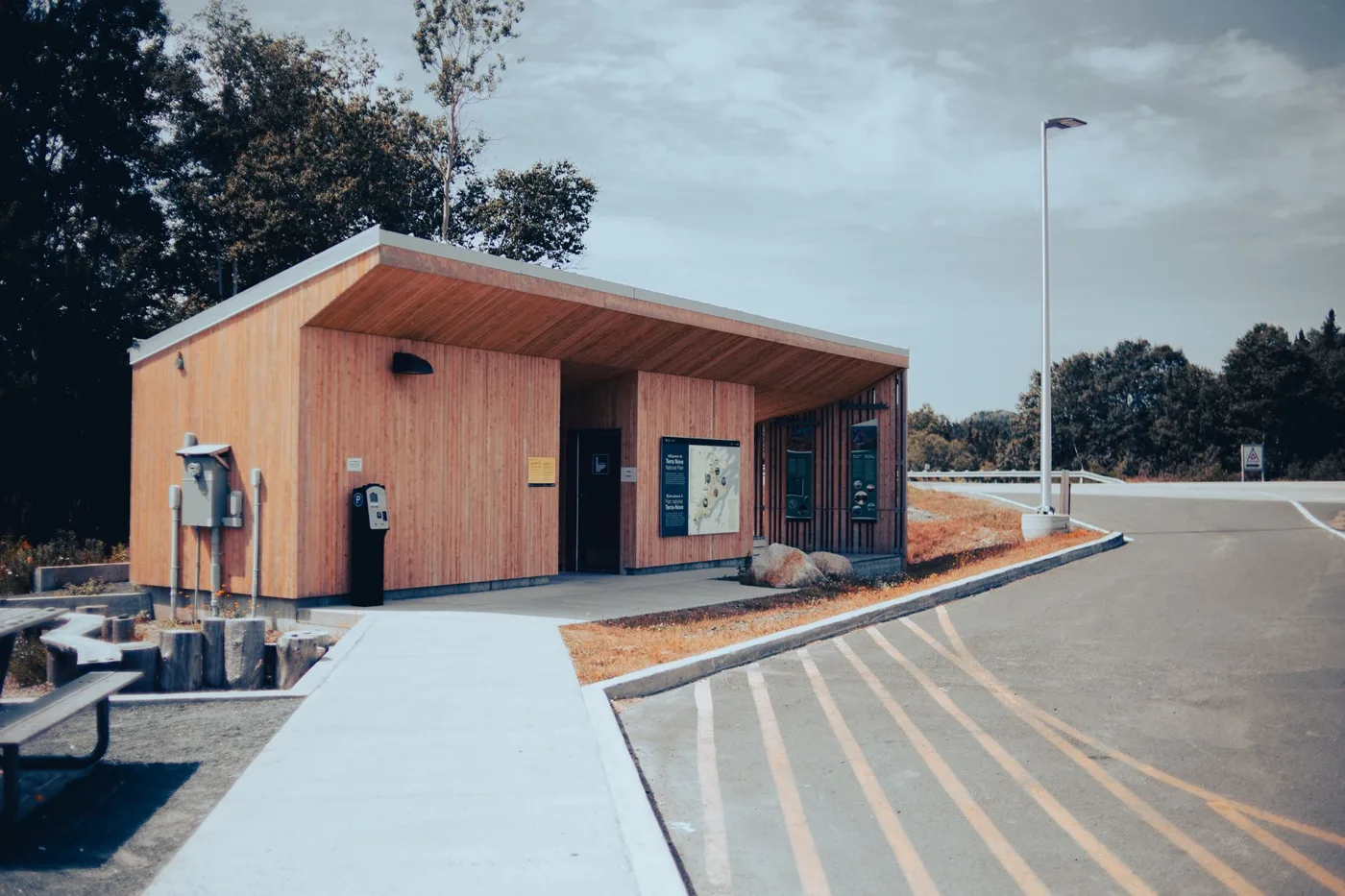
On a long drive, the question isn't whether you'll need a break — it's whether the next stop shows up when you need it. Searching "rest stops near me" while driving is exactly the wrong tool: it's unsafe to do at speed, and it ranks stops around you, including ones behind you. Here's how to find rest stops along your route instead — ahead of you, on your path, when you actually need them.
Why "near me" fails for rest stops
A rest stop is only useful if it's in front of you. "Near me" searches rank by distance from your current position, so half the results sit behind you or off your road entirely — and by the time you've scrolled, you've passed the exit that mattered. What you need is the route-aware version of the question: what's ahead of me, on the road I'm on, in the next 20–50 miles?
Find rest stops along your route, hands-free
The safe way to ask while driving is out loud. The restaurants on your route workflow starts once you set a destination, so you can ask for a rest stop ahead and get options on the road in front of you — without touching the screen.
- Set your destination so the app knows your route.
- Ask for a rest stop ahead, out loud, when you feel the need building — not when it's urgent.
- Pick from what's on your path — the app reads back options ahead of you, and hands off to your map for the exit.
Useful asks once the route is set: "rest stop ahead," "next rest area on my route," or "dog-friendly rest stop ahead" if you're traveling with a pet.
Plan the break before you need it
Fatigue builds gradually. Sleep-safety guidance treats drowsiness as a crash risk — especially overnight and in the mid-afternoon — and recommends pulling over in a secure location to rest if you start to feel sleepy, rather than pushing through (Sleep Foundation on drowsy driving). Don't wait until you're desperate: ask 20–40 miles before you need the exit so you still have a backup if the first option is full, closed, or only a picnic pull-off.
A practical rhythm on long interstate days is a short break every couple of hours — bathrooms, stretch, water — even when you don't feel exhausted yet. That habit is easier when you already know what's ahead on your path.
Know your rest-stop types
Not all stops are equal, and knowing the difference helps you ask for the right one:
- Interstate rest areas — the state-run pull-offs: bathrooms, vending, picnic tables, usually free parking and pet areas. Great for a quick break; no fuel or hot food at most.
- Travel plazas and truck stops — fuel, hot food, convenience stores, and 24-hour bathrooms. The better choice when the break needs to double as a meal or fill-up — see truck stops along your route.
- Exit clusters — gas stations and fast food grouped at an interchange. More choice, slightly more time off the highway.
Traveling with a dog? Interstate rest areas almost always have pet relief areas — worth asking for specifically on a long haul with an animal aboard.
What a safety rest area usually offers (and what it doesn't)
Under federal roadside rules, a safety rest area is a facility off the traveled way for motorist rest, comfort, and information — with parking and amenities states deem necessary (23 CFR § 752.5). On the Interstate system, states may place vending machines for food and drink, but they are not allowed to dispense petroleum products or vehicle parts at those Interstate rest areas. In plain terms:
- Expect: restrooms, parking, often picnic tables, traveler information, and frequently pet areas.
- Don't expect: gas pumps or a full restaurant inside a classic state rest area — for fuel and hot food, plan a travel plaza or exit cluster instead.
Some states brand tourism-heavy sites as welcome centers; the break function is the same idea with more maps and brochures. Amenity quality still varies by state and by how well the site is maintained.
If the rest area is closed or full
States periodically close or limit rest areas for budget, renovation, or overnight safety policies. If your first option is gated, dark, or packed:
- Ask again for the next rest stop ahead on the same route.
- Switch the ask to a truck stop / travel plaza when you need fuel, food, or a reliably lit overnight option.
- Use a nearby exit cluster for bathrooms and coffee if you're fine leaving the interstate briefly — then resume with fuel, coffee, or meal planning as needed.
Time the stop around traffic
A rest stop is also a timing tool. If there's a jam building ahead, a 20-minute break that lets it clear beats 20 minutes of stop-and-go — so checking traffic on your route alongside the stop turns a necessity into a smart pause. A commute-first app that checks conditions on your route and shows weather along the way helps you pick both the stop and the moment.
Related BoardSpy guides
Frequently asked questions
How do I find rest stops along my route?
Use a route-aware app: set your destination, then ask for a rest stop ahead. It returns stops on the road in front of you — reachable from upcoming exits — rather than everything near your current position.
How do I find the next rest stop on my route while driving?
Ask out loud. BoardSpy's voice assistant answers hands-free with what's ahead on your path, so you're not searching a screen at highway speed.
What's the difference between a rest area and a truck stop?
Interstate rest areas are state-run pull-offs with bathrooms and picnic areas but usually no fuel or hot food. Truck stops and travel plazas add fuel, restaurants, and 24-hour facilities — better when the break doubles as a meal or fill-up.
Are there dog-friendly rest stops along my route?
Most interstate rest areas include pet relief areas, making them the reliable choice when traveling with a dog. Ask for a rest area specifically rather than a fuel-station exit.
Should I stop at a rest area during heavy traffic?
Often, yes — if a jam is building ahead, a short break that lets it clear can cost you nothing in arrival time. Check traffic on your route before choosing the moment.
References
Safety and facility framing in this article draws on the sources below.
- Sleep Foundation: Drowsy Driving — Guidance on drowsy-driving risk and pulling over in a secure location to rest when sleepy.
- 23 CFR § 752.5 — Safety rest areas — Federal rule (via Cornell LII) defining Interstate safety rest areas and limiting petroleum sales at those sites.
- AAA Foundation: Countermeasures to Reduce Drowsy Driving — Evidence summary that sufficient sleep, napping, and caffeine reduce drowsy-driving risk on long trips.