Four realistic ways to cover the 90 miles: drive, take the train, take a bus, or fly. Three of them are sensible and one of them isn't. Corridor timing if you drive: I-80 traffic guide and eastbound evening commute.
Quick comparison
| Option | Door-to-door time | Predictable? | Best for |
|---|---|---|---|
| Drive (I-80) | 1 hr 40 min – 3 hr 30 min | No | Suburban ends, cargo, flexibility |
| Capitol Corridor train + connection | ~2 hr 30 min – 3 hr | Yes | Downtown-to-downtown, working en route |
| Intercity bus | 2 hr – 3 hr | Somewhat | Budget travel |
| Fly | 3 hr+ realistically | No | Almost nobody |
The honest headline: for downtown-to-downtown at peak, the train and the drive take about the same time — but only one of them takes the same time every day.
Option 1 — Drive
The default, and correct for most trips. Route: I-80 west through Davis, Vacaville, Fairfield, Vallejo, then the Bay Bridge. Free-flow about 1 hour 40 minutes. Peak 2 hr 30 min to 3 hr 30 min.
Two structures decide your drive time. The Yolo Causeway, 5–15 miles out of Sacramento, carries more than 10,000 vehicles per hour at peak against a design capacity of roughly 2,000 per lane per hour — about 150,000 commuters use it daily. It is elevated with narrow lanes and no shoulders, so a single crash has no escape route and has produced delays exceeding an hour. Local commuters describe it as bumper-to-bumper every afternoon from about 2:00 to 6:00 p.m. (Caltrans District 3).
The Bay Bridge approach is the westbound morning equivalent. The bypass worth knowing: when the causeway is blocked, take I-5 north to Woodland then Highway 113 south to rejoin I-80. Local authorities advise exactly this, and many regular commuters use it routinely rather than only in emergencies.
Best times to drive: 9:30 a.m.–1:30 p.m., or after 6:30 p.m. Avoid 6:30–9:00 a.m. westbound and 2:00–6:00 p.m. eastbound.
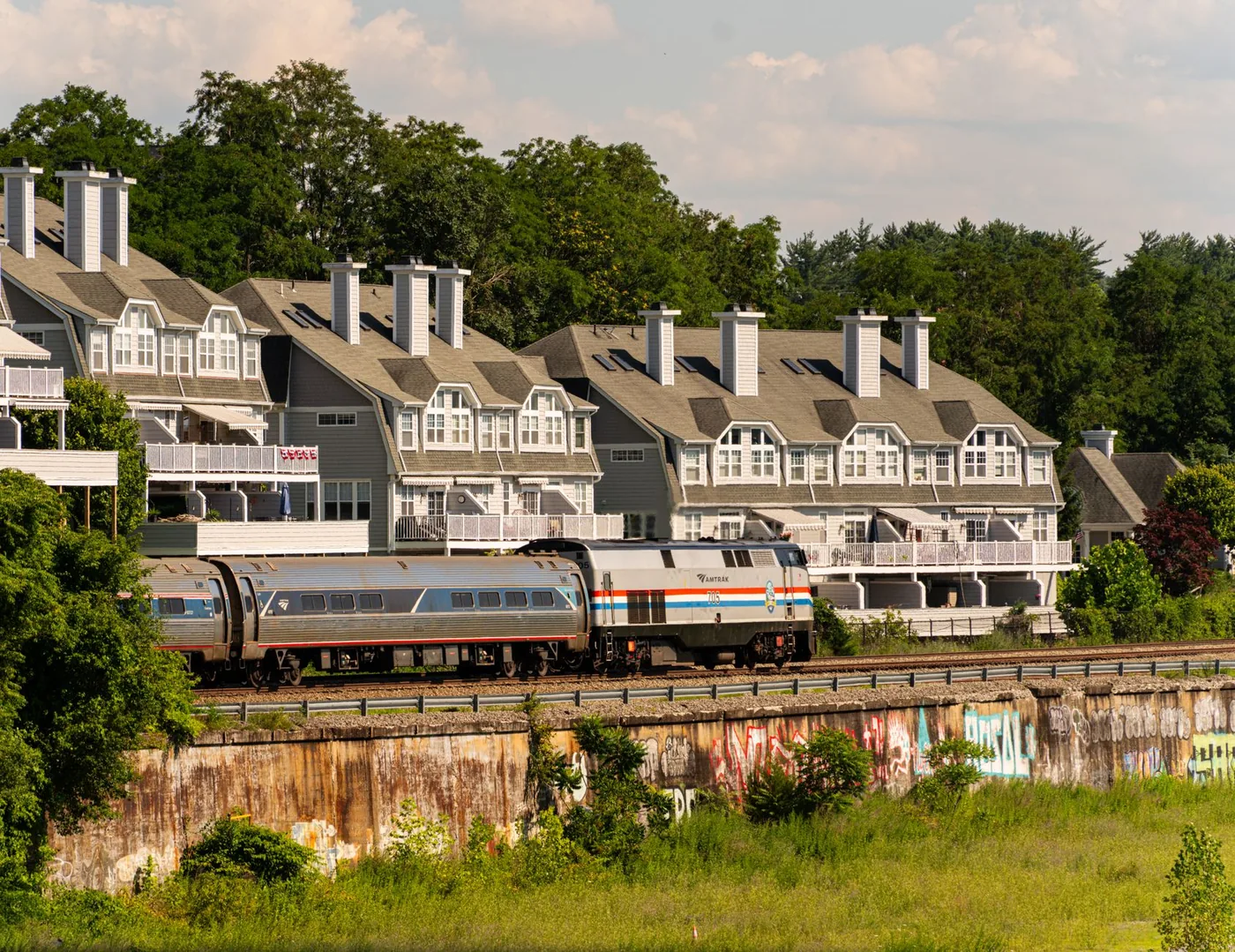
Option 2 — The Capitol Corridor train
The real alternative, with one catch that most guides bury. Operator: Capitol Corridor Joint Powers Authority, with Amtrak.
- Route: 168 miles, 17–18 stations, Auburn to San Jose via Sacramento and Oakland
- Frequency: up to 30 weekday round trips Sacramento–Oakland in 2026; 22 weekend round trips on the main segment (schedules)
- Sacramento to Emeryville: typically 1 hr 45 min to 2 hr
- Ridership: 1,138,753 in FY25, up 10.3%
- Fares: distance-based, and increasing from 1 September 2026 under the operator's business plan
The catch: trains do not go directly to San Francisco. They stop at Emeryville on the East Bay side, and you connect into the city by Amtrak Thruway bus or local transit. That connection is what turns a two-hour train ride into a two-and-a-half-to-three-hour journey. Oakland is a direct station — see Oakland to Sacramento if that is your actual pair.
Where the train genuinely wins: downtown Sacramento to downtown San Francisco; travelling during a peak window; you want to work, read, or sleep instead of drive; you'd otherwise pay for San Francisco parking.
Where it doesn't: either end of your trip is suburban; you need a car at your destination; you're travelling as a group where driving costs split down.
The correct way to think about it: the train is not faster than a good drive. It is the same as a bad drive, every single time. You are buying predictability, not speed.
Option 3 — Intercity bus
Several operators run the corridor. Cheapest option, roughly 2 to 3 hours depending on service and traffic. The important limitation: buses use I-80, which means they sit in the same causeway and Bay Bridge congestion as cars. You get the cost saving without the predictability the train offers. A bus scheduled at 2 hours can take 3 on a bad afternoon. Reasonable for budget travel. Not a way to guarantee an arrival time.
Option 4 — Fly (don't)
Sacramento International to SFO or OAK is a short hop, and the flight time is irrelevant. Realistic door-to-door: get to SMF, arrive 90 minutes early, fly 50–60 minutes, deplane, collect bags, then travel from SFO or OAK into the city. Three hours minimum, more if anything goes wrong, at several times the cost of the train. For 90 miles, flying is the slowest option on this list. The only reason to do it is a connecting itinerary.
How to choose
- Both ends near downtown, travelling at peak → Train. Same time as driving, none of the variance.
- Either end suburban → Drive. The first-and-last-mile problem outweighs everything else.
- Need a car when you arrive → Drive.
- Travelling off-peak, 9:30 a.m.–1:30 p.m. → Drive. It's genuinely fast in this window and the train's advantage disappears.
- Hard arrival time, any hour → Train, or drive with a large buffer. The causeway can add an hour with no warning.
- On a tight budget → Bus, accepting the timing risk.
Weather considerations
Tule fog, November to February, is the one that matters. Dense Central Valley ground fog can drop visibility to near zero on the Davis–Sacramento stretch — including on the causeway, where there is no shoulder to pull onto. In heavy tule fog the train stops being a convenience option and becomes the sensible one. Winter rain compounds a corridor already running above design capacity. See does rain make traffic worse.
Before you go
The decision between these options is a live one, not a settled one. The train wins on a Tuesday at 4 p.m. and loses on a Sunday at 10 a.m. BoardSpy tells you before you leave what the drive actually looks like today — causeway status, Bay Bridge status, whether the Highway 113 bypass is worth taking, and live fog and rain on the route — so you can pick the right option for today rather than the one that was right last week.
Frequently asked questions
What is the best way to get from Sacramento to San Francisco?
Drive if either end is suburban or you need a car on arrival. Take the Capitol Corridor plus an East Bay connection for downtown-to-downtown trips at peak. Skip flying for this 90-mile pair.
How long is the Capitol Corridor from Sacramento to San Francisco?
Sacramento to Emeryville is typically 1 hour 45 minutes to 2 hours. Add a Thruway bus or local transit into San Francisco, so door-to-door is about 2 hours 30 minutes to 3 hours.
Does the train go all the way to San Francisco?
No. Capitol Corridor trains stop on the East Bay side (Emeryville/Oakland). You connect into the city.
Is driving faster than the train?
Off-peak, yes — about 1 hour 40 minutes on a clear I-80. At peak a bad drive can run 3 hours 30 minutes, which is slower than the train's fixed time.
Should I fly from Sacramento to San Francisco?
Almost never. Door-to-door is three hours or more once you include airport process and the ride into the city. Flying only makes sense as a connecting itinerary.
References
Rail facts come from the Capitol Corridor operator. Highway context is Caltrans District 3. Timing ranges are pattern estimates, not measured figures for today.
- Capitol Corridor — Operator: Sacramento–Oakland/Emeryville service, Thruway connections, FY ridership, 2026 fare change.
- Capitol Corridor schedules — Weekday and weekend frequencies.
- Caltrans District 3 — I-80 / Yolo Causeway corridor operations.
- Data sources and privacy — How leave-time recommendations use your saved route (limits disclosed).