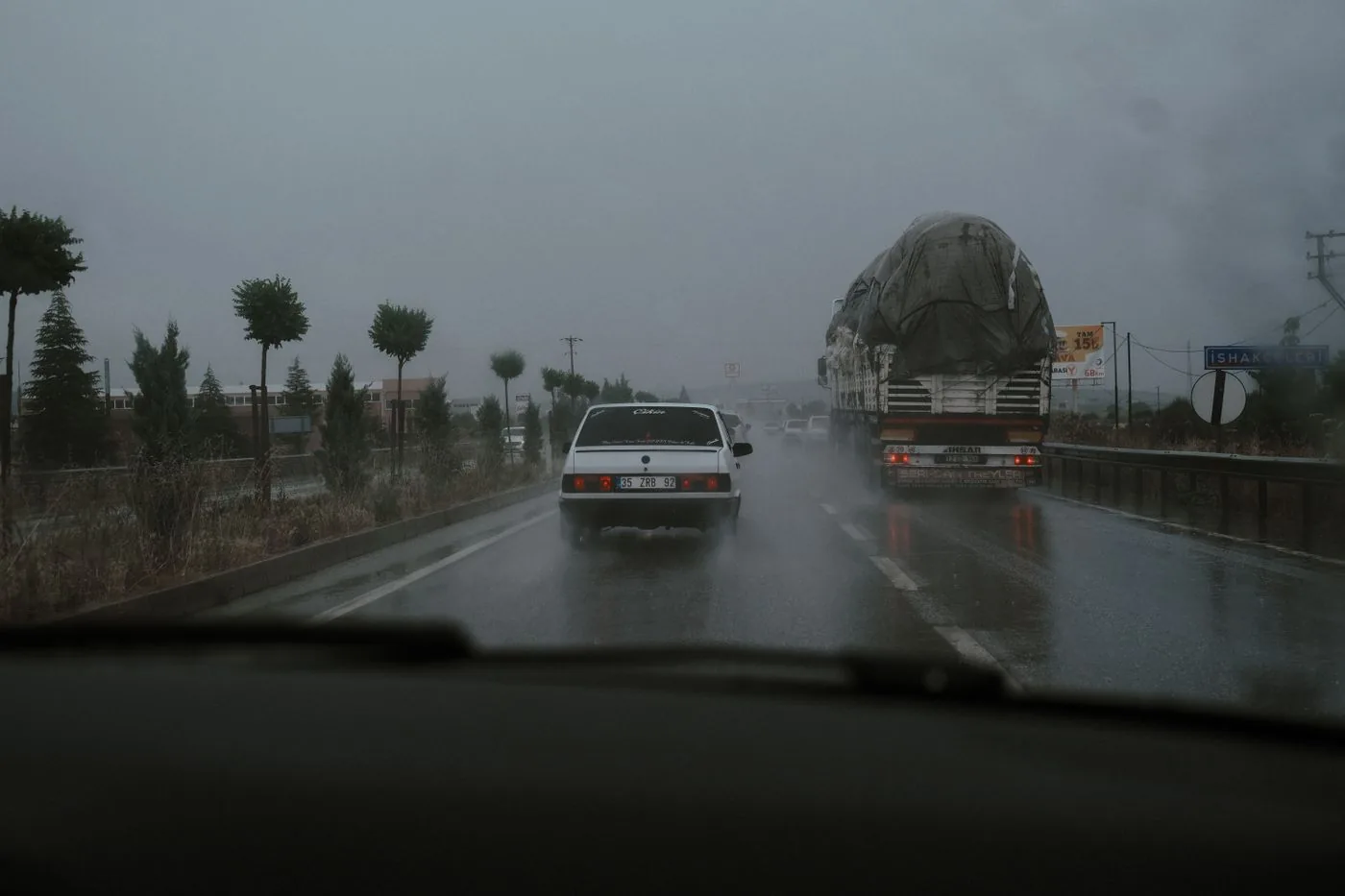
You already know the drive takes longer when it rains. The useful part is understanding why, and how much lead time you need to plan around it.
Why rain slows traffic
Rain affects a road in several ways at once, and they stack:
- Drivers slow down. Reduced visibility and less grip mean people ease off — sensibly — and average speeds fall across the whole corridor.
- Following distances stretch. Wet roads lengthen braking distance, so drivers leave bigger gaps, which reduces how many vehicles a lane can carry.
- Crashes rise. Wet conditions increase collision risk, and a single incident on a busy corridor causes far more delay than the rain itself.
- More people drive. Commuters who'd normally walk, cycle or take a short transit trip switch to driving, adding volume exactly when capacity has dropped.
Together, these mean a route that runs a few minutes late on a dry day can run considerably worse in steady rain — and the effect compounds if it coincides with the peak.
The problem with checking the weather app
Most people check the forecast for where they are, or where they're going. But a commute crosses a lot of ground, and conditions change across a metro area: it can be dry at home and raining hard on the far side of town, or a storm can be sitting exactly over the stretch of highway you use.
What actually helps is weather along your route — the conditions on the road you'll be driving, at roughly the time you'll be on it. That's the difference between "it might rain today" and "it's raining on the section you take at 8am, leave earlier."
Planning around it
BoardSpy shows conditions along your route rather than just at a point, and pairs that with your route's traffic — so a wet morning turns into a concrete decision: leave earlier, take the alternate, or accept the delay knowingly. Its monthly insights also show the average delay for each weekday and the hottest and coolest days alongside your leave-by and avoid times, which makes the weather-and-timing relationship easy to see over a month rather than guessing day to day.
See also the route planner with weather, the leave time app with weather alerts, how much time traffic adds to your commute, and the best time to leave for work.
Practical rules for wet commutes
- Add a buffer, don't rush. Leaving 10–15 minutes earlier is safer and less stressful than driving faster in poor conditions.
- Check the route, not the city. Conditions vary across a metro; the stretch you drive is what matters.
- Expect incident delays. The biggest wet-weather delays usually come from a crash, not the rain itself — so build in slack.
- Watch the peak overlap. Rain during rush hour is much worse than the same rain at 10am.
Frequently asked questions
Does rain make traffic worse?
Yes. Rain lowers average speeds, lengthens braking distances and increases crash risk, while also pushing more people to drive — so the same route takes measurably longer in wet weather.
How much longer does a commute take in the rain?
It varies by how heavy the rain is, the road, and whether it coincides with peak hours. Light rain may add only a few minutes; heavy rain during rush hour, especially if it causes a crash, can add far more.
How do I check the weather along my route instead of just my destination?
Use a route-aware app. BoardSpy shows conditions along your whole route rather than at a single point, so you can see whether rain will hit the stretch you drive at the time you drive it.
References
The weather-and-traffic effects summarized here are documented in federal road-weather research:
- How Do Weather Events Affect Roads? — FHWA Road Weather Management summary of rain impacts on freeway speed, capacity, and crash share.
- Empirical Studies on Traffic Flow in Inclement Weather — FHWA research quantifying free-flow speed and capacity reductions under light and heavy rain.
- Empirical Studies on Traffic Flow in Inclement Weather — Study Results — Detailed rain-intensity adjustment factors for speed and capacity across U.S. cities.