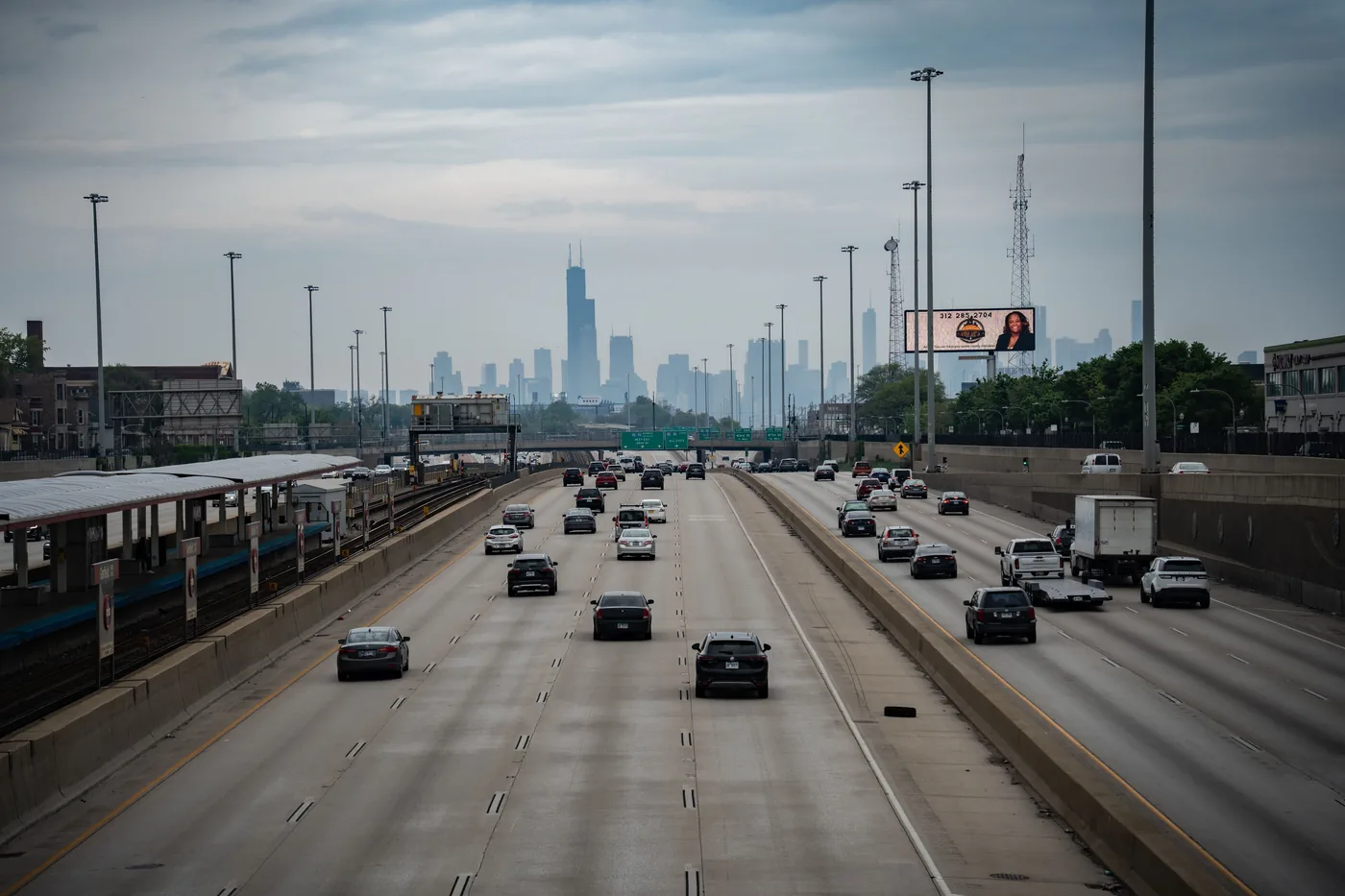
Chicago overtook New York in 2025 to become the worst traffic city in America. Here is what the data says, when the Kennedy and the Dan Ryan actually peak, and how to find the best time to leave for your route.
Chicago is now America's most congested city
The INRIX 2025 Global Traffic Scorecard puts the average Chicago driver at 112 hours lost to congestion — the highest figure of any US city, ahead of New York at 102 and Philadelphia at 101. Measured by hours lost, only Istanbul ranks worse worldwide, at 118. On INRIX's population-weighted Impact Rank, Chicago places third globally, behind Istanbul and Mexico City.
That is up 10% in a single year, from 102 hours, and INRIX puts the cost at roughly $2,063 per driver in wasted time. A hundred and twelve hours is nearly three working weeks a year.
The number that explains the experience, though, is the speed: INRIX measured Chicago's average last-mile speed at just 9 mph — slower than New York's 11 (WBEZ). The final stretch into the Loop is where the time actually disappears.
Chicago rush hour times at a glance
| Corridor | Morning | Evening |
|---|---|---|
| Typical Chicago | 7:00–9:00 a.m. inbound toward the Loop | 4:00–7:00 p.m. outbound, longer than the morning |
| Kennedy (I-90/94) | Slow through the morning inbound peak (northwest spine to O'Hare; construction shifts the worst stretch) | Slow through the evening outbound peak |
| Dan Ryan (I-90/94 south of the Loop) | Congested through the morning peak | Congested through the evening peak |
| Quieter windows | Before 6:30 a.m., or 10:00 a.m.–2:00 p.m. | After 7:30 p.m. |
Night-shift crews live on the edges of these windows. On the night block of a 4 on 4 off work schedule with a 7 p.m. start, you leave before the outbound evening peak has cleared at about 7:30, and the 7 a.m. drive home lands at the start of the morning peak.
Prefer a leave-by time to a set of windows? Put your arrival time into the departure time calculator and it will work out when to go.
When is Chicago traffic worst?
Direction matters as much as the clock in Chicago, because the expressways are radial — each one is heavy inbound in the morning and outbound in the evening, and the two are not mirror images.
- The Stevenson (I-55) — outbound from the I-90 interchange is the standout. INRIX ranks it the 7th worst corridor in the country, costing daily drivers there about 87 hours a year on its own.
- The Kennedy (I-90/94) — the northwest spine to O'Hare, slow in both peaks and reshaped repeatedly by construction.
- The Dan Ryan (I-90/94 south of the Loop) — one of the widest urban expressways in America and still congested at both peaks.
- The Eisenhower (I-290) — the western approach, with the Jane Byrne Interchange as its long-standing chokepoint.
- DuSable Lake Shore Drive — fills the moment the expressways back up, so it is rarely the escape it looks like on a map.
The simple move: shift off the peak
Leaving just before or just after the busiest window clears a large share of the delay — even the Kennedy breathes on either side of the peak. Against 112 hours a year, a consistent 15 to 30 minute shift is the cheapest time you will ever buy back.
Given the evening peak is the heavier of the two, the afternoon shift is usually worth more than the morning one.
Three Chicago-specific things that move the peak
- Winter changes everything. Lake-effect snow, ice and lakefront rain slow every corridor and stretch both peaks. Checking conditions on your route before leaving matters more here than in most cities — see how weather affects traffic.
- Freight. Chicago is the freight hub of North America, and truck volume on the Stevenson, the Dan Ryan and the Tri-State is part of why those corridors rank where they do nationally.
- Construction season. The building window is short and intense, so the worst stretches move year to year. A route that worked last summer may not work this one.
Why your best time is route-specific
The Kennedy does not peak like the Stevenson, inbound is not outbound, and a snow day is its own category. Citywide advice smooths over exactly the differences that decide your drive. Nationally, the worst day of the week varies by city too.
Find the best time to leave for your Chicago route
Google Maps and Waze show live traffic and turn-by-turn once you are already on the road. BoardSpy is the leave-time app: it checks your saved Chicago route before you leave, recommends when to go, sends traffic and weather alerts, and tracks delay and on-time stats including your best and worst days. When you set off, it opens your map app for turn-by-turn. For how routing apps differ from departure-timing tools, see best app to avoid traffic and Google Maps commute alternatives.
Just passing through?
This page is for commuters driving in and around Chicago. If you are crossing the metro on the interstate rather than commuting within it, see the best time to drive through Chicago, and where to eat driving through Chicago.
Corridor detail: Chicago to Naperville by Metra or drive. Driving I-65 south toward Indiana? See the best time to leave Indianapolis to avoid traffic. Driving I-55 south toward Missouri? See the best time to leave St. Louis to avoid traffic.
Nearby cities
- Best time to leave Indianapolis
- Best time to leave Minneapolis
- Best time to leave St. Louis
- Best time to leave Columbus
- Best time to leave Detroit
Every metro is listed on Best time to leave by city.
Frequently asked questions
What is the best time to leave to avoid traffic in Chicago?
Generally before 6:30 a.m. or after 9:00 a.m. in the morning, and outside 4:00–7:00 p.m. in the evening. The evening peak is the heavier of the two, so an afternoon shift buys back more time than a morning one. The exact best time depends on your expressway and direction.
When is Chicago rush hour?
Roughly 7:00–9:00 a.m. inbound and 4:00–7:00 p.m. outbound, with the evening peak usually heavier and longer than the morning.
Is Chicago really the most congested city in the US?
Yes. INRIX's 2025 scorecard ranks Chicago first in the United States at 112 hours lost per driver, ahead of New York at 102 and Philadelphia at 101. Globally, only Istanbul's drivers lose more hours; on INRIX's population-weighted Impact Rank, Chicago places third worldwide, behind Istanbul and Mexico City.
What is the worst expressway in Chicago?
The outbound Stevenson (I-55) from the I-90 interchange, which INRIX ranks the 7th worst corridor in the country — about 87 hours a year lost by drivers who use it daily. The Kennedy and the Dan Ryan carry heavier total volume but less delay per driver.
Why is Chicago traffic so bad?
Expressway capacity that has not kept pace with demand, transit ridership still below 2019 levels, enormous freight volume through North America's rail and trucking hub, an intense summer construction season, and winter weather that slows every corridor. INRIX measured the average last-mile speed at just 9 mph.
How do I find the best time to leave for my Chicago commute?
Use a leave-time commute app that reads your actual route rather than only a live map. BoardSpy recommends when to leave for your Chicago route, sends pre-departure traffic and weather alerts, and tracks on-time performance and your best and worst traffic days. Download it here.