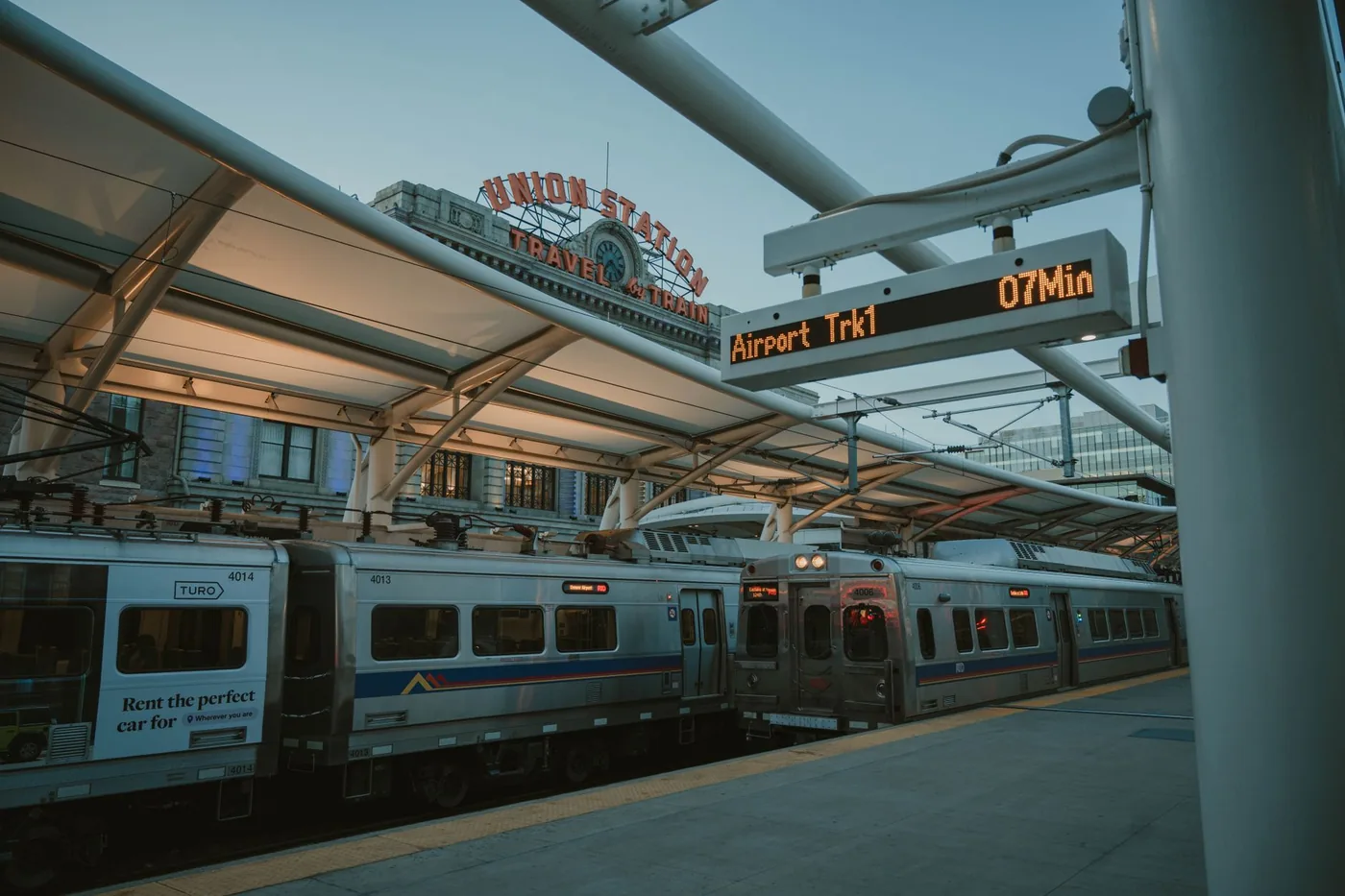
About 30 miles. Forty minutes clear, over an hour at peak, and this is one of the most heavily used commuter corridors in the Midwest.
It is also a corridor where the train is not a fallback. Naperville is a Metra town, and the BNSF Line is how a very large number of people make this trip every weekday.
Quick comparison
| Option | Journey time | Predictable? | Best for |
|---|---|---|---|
| Metra BNSF Line | ~35–55 min | Yes | Weekday commuting, downtown ends |
| Drive (I-88 / I-290) | 40 min – 1 hr 15 | No | Suburban ends, off-peak, cargo |
Metra BNSF Line
Naperville Station to Chicago Union Station.
Journey time: roughly 35 minutes on an express, 50 to 55 on a local. Frequency: high on weekdays, particularly at peak; reduced at weekends. Fare: zone-based.
The BNSF Line is one of Metra's busiest, and Naperville is one of its busiest stations. That tells you something: for downtown-bound commuters this is the default, not the alternative.
An express run at 35 minutes beats driving at any hour of any weekday. Even a local at 55 minutes beats a peak-hour drive while being completely predictable.
The catch is the weekend timetable. Metra runs reduced weekend service, so a Saturday trip that would be trivial on a Tuesday needs checking against the schedule first.
Driving
Distance: about 30 miles. Free-flow: ~40 minutes. Weekday peak: 1 hour to 1 hour 15.
Route: I-88 (Reagan Memorial Tollway) east from Naperville, connecting to I-290 (the Eisenhower) into Chicago. I-55 is the alternative for destinations on the south side.
The delay concentrates at the Chicago end. The Eisenhower approach into the Loop is among the most congested stretches in the metro, and I-290 has limited resilience — one incident and the whole approach stops.
I-88 is a tollway, so factor that in alongside downtown Chicago parking, which is expensive enough to change the maths on a day trip.
When to go, if you are driving
| Departure | Typical duration | Notes |
|---|---|---|
| Before 6:00 a.m. | ~40 min | Free-flow |
| 6:00 – 9:00 a.m. | 1 hr – 1 hr 15 | Peak eastbound into Chicago |
| 10:00 a.m. – 2:30 p.m. | 40–50 min | Best window |
| 3:00 – 6:30 p.m. | 1 hr – 1 hr 15 | Peak westbound out of Chicago |
| After 7:00 p.m. | ~40 min | Clear |
Direction matters. Employment concentrates in Chicago, so mornings load eastbound and evenings westbound. Driving Chicago→Naperville means the evening is your problem; Naperville→Chicago means the morning is.
A reverse commuter — living in Chicago, working in Naperville — has the better arrangement on this corridor and travels against the dominant flow in both directions.
How to choose
Weekday, downtown Chicago at one end → Metra, without much hesitation. An express is faster than driving and you avoid Loop parking entirely.
Weekend → Check the Metra timetable first. If the schedule does not fit, driving is easier at weekends anyway.
Either end suburban → Drive. Metra serves Naperville Station and Union Station well; anywhere else and the first-mile problem takes over.
Need a car at the other end → Drive.
Off-peak midday → Either works. Driving at 11 a.m. is genuinely quick.
Travelling as a group → Driving costs split; Metra fares do not.
Weather
Chicago weather is the strongest argument for Metra on this corridor.
Winter snow and lake-effect events produce severe delays on I-88 and I-290, and the Eisenhower in particular degrades badly in snow. Metra keeps running through most of it, with delays measured in minutes rather than hours.
Summer thunderstorms can be intense and produce flash flooding on the low sections of the expressway network.
Extreme cold affects both — Metra can experience delays in severe cold — but the road is affected worse.
If snow is forecast during your travel window, take the train.
The Naperville factor
Naperville is one of the largest suburbs in the Chicago metro and functions as a genuine employment centre in its own right, not just a bedroom community. That produces meaningful reverse commute traffic — people travelling from Chicago outward in the morning.
If that is your pattern, you have the easier version of this corridor. Both directions run against the dominant flow, and a 7:30 a.m. westbound drive is materially faster than the eastbound equivalent.
Before you leave
Thirty miles with a genuinely competitive train service means the decision is about today's conditions, not about the route. Citywide: best time to leave Chicago to avoid traffic. Through traffic: best time to drive through Chicago.
BoardSpy tells you before you leave what I-88 and I-290 actually look like right now, with live weather on the route — so you know whether today is a driving day or a Metra day.
Related BoardSpy guides
- Best time to leave in Chicago
- Where to eat driving through Chicago
- Baltimore to DC: drive, train or bus
Frequently asked questions
How far is Chicago to Naperville?
About 30 miles. Driving is about 40 minutes clear and 1 hour to 1 hour 15 at weekday peak on I-88 to I-290. Pattern estimates, not live times.
Is Metra faster than driving to Naperville?
A BNSF express is about 35 minutes and beats driving on any weekday. A local is 50–55 minutes and still beats a peak drive while being predictable. Naperville is one of Metra’s busiest stations.
Does Metra to Naperville run on weekends?
Yes, on a reduced timetable. Check the schedule before a Saturday trip; if it does not fit, weekend driving is easier anyway.
When is driving Chicago to Naperville worst?
Westbound 3:00–6:30 p.m. Eastbound into Chicago is worst 6:00–9:00 a.m. Reverse commuters (Chicago to Naperville in the morning) travel against the dominant flow.
Should you take Metra if snow is forecast?
Usually yes. I-88 and I-290, especially the Eisenhower, degrade badly in snow. Metra delays are typically minutes rather than hours.
References
Posted signs and operator timetables override this guide. Drive-time windows are pattern estimates, not measured figures for today.
- Metra BNSF Line — Naperville–Chicago Union Station schedules, including weekend service changes.
- BoardSpy data sources — How leave-time recommendations use a saved route (limits disclosed).