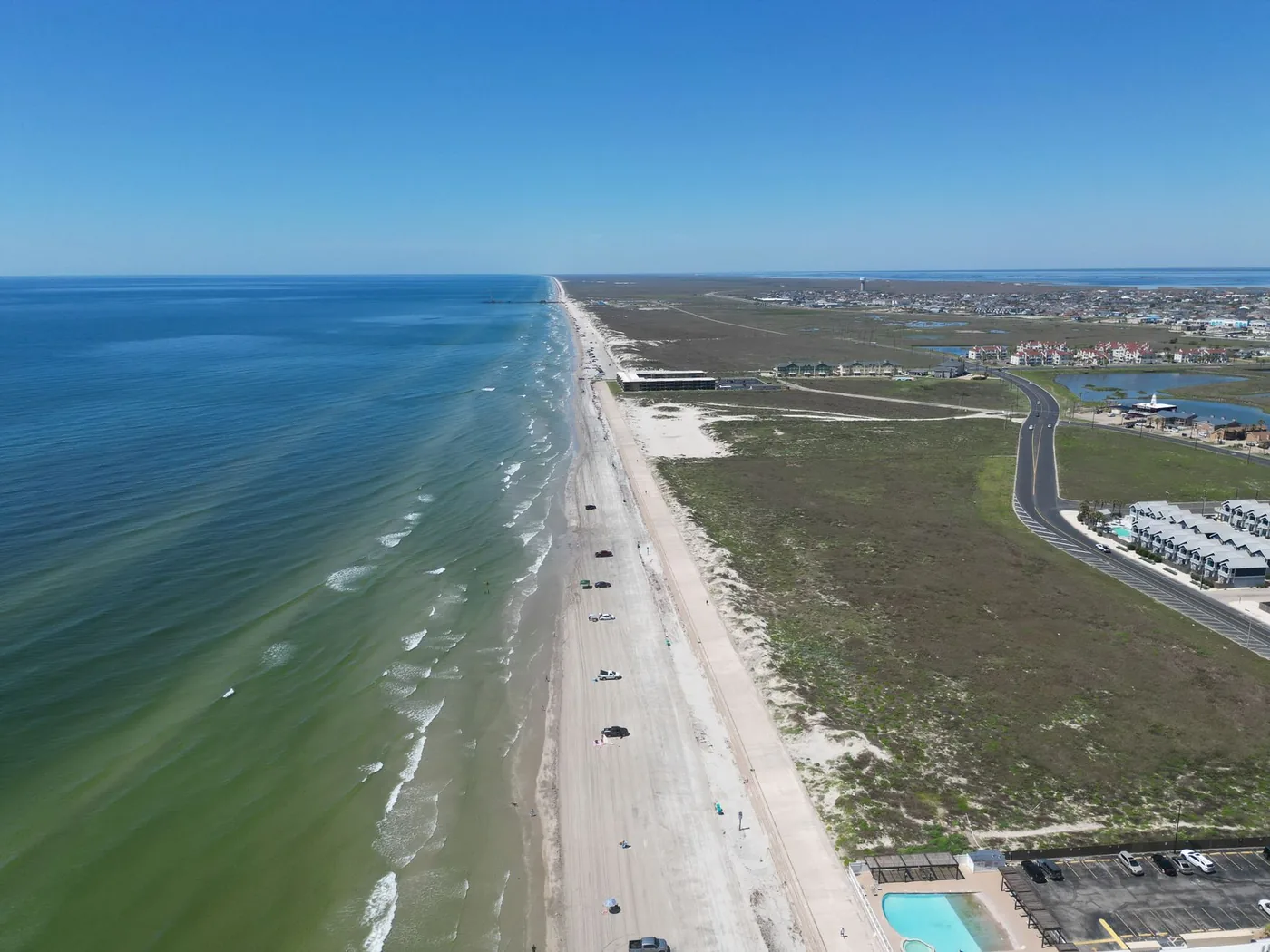
About 145 miles and roughly two hours ten minutes straight down I-37 to the Gulf. One road, no decisions, and the easiest long-ish drive in south Texas.
The complications are weather and season, not traffic.
The numbers
| Feature | |
|---|---|
| Distance | ~145 miles |
| Drive time, free-flow | ~2 hr 10 |
| Realistic | 2 hr 15 – 2 hr 45 |
| Route | I-37 southeast, continuous |
| Alternative | US 181 via Beeville |
The route
I-37 southeast out of San Antonio through Pleasanton, Three Rivers and Mathis, into Corpus Christi. It is a straight, well-maintained interstate with light traffic outside the metro ends.
US 181 runs a parallel course via Beeville and is the alternative. Slower, more rural, and worth taking only if I-37 is closed or if you want a change of scenery.
There is genuinely no route decision to make here. This is an I-37 drive.
Where the traffic is
Almost nowhere, which makes this an unusual Texas corridor.
The San Antonio end is the only real congestion. I-37 through downtown San Antonio and the I-410 and I-35 interchanges carry metro traffic, and the Texas A&M Transportation Institute and TxDOT rank Texas metros heavily on their annual Top 100 congested segments list. Getting out of San Antonio in the morning peak or back in during the evening one costs you 20 to 30 minutes. I-35 context just north of town: Austin to San Antonio I-35 traffic guide.
The middle 100 miles are open, rural and fast. Free-flow nearly all the time.
The Corpus Christi end is light except during peak beach season.
Best departures from San Antonio: before 6:30 a.m., between 9:30 a.m. and 3:00 p.m., or after 7:00 p.m.
Season matters more than time of day
This is the corridor's defining feature, and it separates it from most Texas routes.
Summer weekends bring heavy beach traffic. Corpus Christi, Port Aransas and Padre Island are the closest Gulf beaches to San Antonio and much of central Texas, and Friday evening southbound and Sunday afternoon northbound carry real volume in season.
Spring break is the peak of the peak. Port Aransas and Padre Island draw substantial crowds, and the ferry to Port Aransas backs up badly.
Winter is quiet and the drive is genuinely pleasant.
If you are travelling in season, the standard advice applies in reverse: go early Friday or wait until Saturday morning, and come back Sunday morning rather than Sunday afternoon.
Where to stop
Two hours ten does not demand a stop, but the corridor is thin enough that you should know where the services are.
Pleasanton — about 35 miles out. First services after San Antonio.
Three Rivers — about 75 miles, roughly the midpoint. The natural break, and the most substantial services between the two cities.
Mathis — about 110 miles. Last stop before Corpus Christi, and near Lake Corpus Christi State Park if you want a longer break.
The gaps between these are real but not extreme. Do not leave San Antonio on a quarter tank, but you will not be stranded.
Weather — the Gulf Coast factor
Hurricane season runs June through November, and this is the corridor that matters for it. Corpus Christi is directly on the Gulf, and evacuation orders reverse the entire route — everyone heading inland at once, on I-37, in one direction.
If a storm is in the Gulf during your travel window, watch it seriously and be prepared to move early. Evacuation traffic on I-37 is the single worst condition this corridor produces.
Coastal fog is common in spring and can be dense on the approach to Corpus Christi.
Summer heat is significant and the middle stretch is exposed. Carry water.
Crosswinds on the open south Texas plains affect high-profile vehicles, and the Gulf approach is windy year-round.
Flash flooding — south Texas gets intense rainfall events and the low crossings on the route fill quickly. Never drive into standing water.
Port Aransas and the islands
A lot of trips on this corridor do not end in Corpus Christi. They continue to Port Aransas or North Padre Island.
Port Aransas requires the ferry from Aransas Pass, which is free but queues significantly in peak season — an hour or more on a summer Saturday is normal. The alternative is the causeway route via Corpus Christi and Padre Island, which is longer but avoids the wait.
North Padre Island is reached by the JFK Causeway from Corpus Christi, no ferry needed.
If your destination is Port Aransas in season, factor the ferry into your plan or take the causeway.
The return trip
Corpus Christi to San Antonio flips the constraint to your arrival.
- Arrive before 3:30 p.m. or after 7:00 p.m. to avoid the San Antonio evening peak
- Sunday afternoon in beach season is the worst regular slot — leave in the morning if you can
Statewide context: Texas intercity travel.
Before you leave
One hundred and forty-five miles on one road, where the variable is the Gulf rather than the traffic. For the Houston end of a longer Texas run, see the best time to leave Houston to avoid traffic. Food ahead: restaurants on my route.
BoardSpy tracks the corridor and tells you before you leave what today's run looks like — with live Gulf weather, wind and storm tracking on the route ahead rather than at your starting point.
Frequently asked questions
How long is the drive from San Antonio to Corpus Christi?
About 145 miles on I-37. Free-flow is about 2 hours 10 minutes; realistic is 2 hours 15 to 2 hours 45 minutes. Pattern estimates, not live times.
Is there an alternative to I-37?
US 181 via Beeville runs a parallel course. Slower and more rural. Worth taking only if I-37 is closed or you want a change of scenery.
When is San Antonio to Corpus Christi traffic worst?
The San Antonio end in the morning peak or evening return, plus summer weekends and spring break beach traffic. Sunday afternoon northbound in beach season is the worst regular return slot.
Where should I stop between San Antonio and Corpus Christi?
Pleasanton (~35 miles), Three Rivers (~75 miles, the midpoint), and Mathis (~110 miles). Do not leave San Antonio on a quarter tank.
How do I get to Port Aransas from this drive?
The ferry from Aransas Pass is free but queues significantly in peak season — an hour or more on a summer Saturday is normal. The causeway via Corpus Christi and Padre Island is longer but avoids the wait.
References
Hurricane watches and posted ferry waits override this guide. Drive-time windows are pattern estimates, not measured figures for today.