Three interstates, a river with tolled crossings, and one weekend a year that changes everything.
The junction
I-65 runs north to south — Indianapolis toward Nashville. I-64 runs east to west — St Louis toward Lexington. I-71 runs northeast toward Cincinnati. I-265 rings part of the metro on both sides of the river.
The river crossings and the tolls
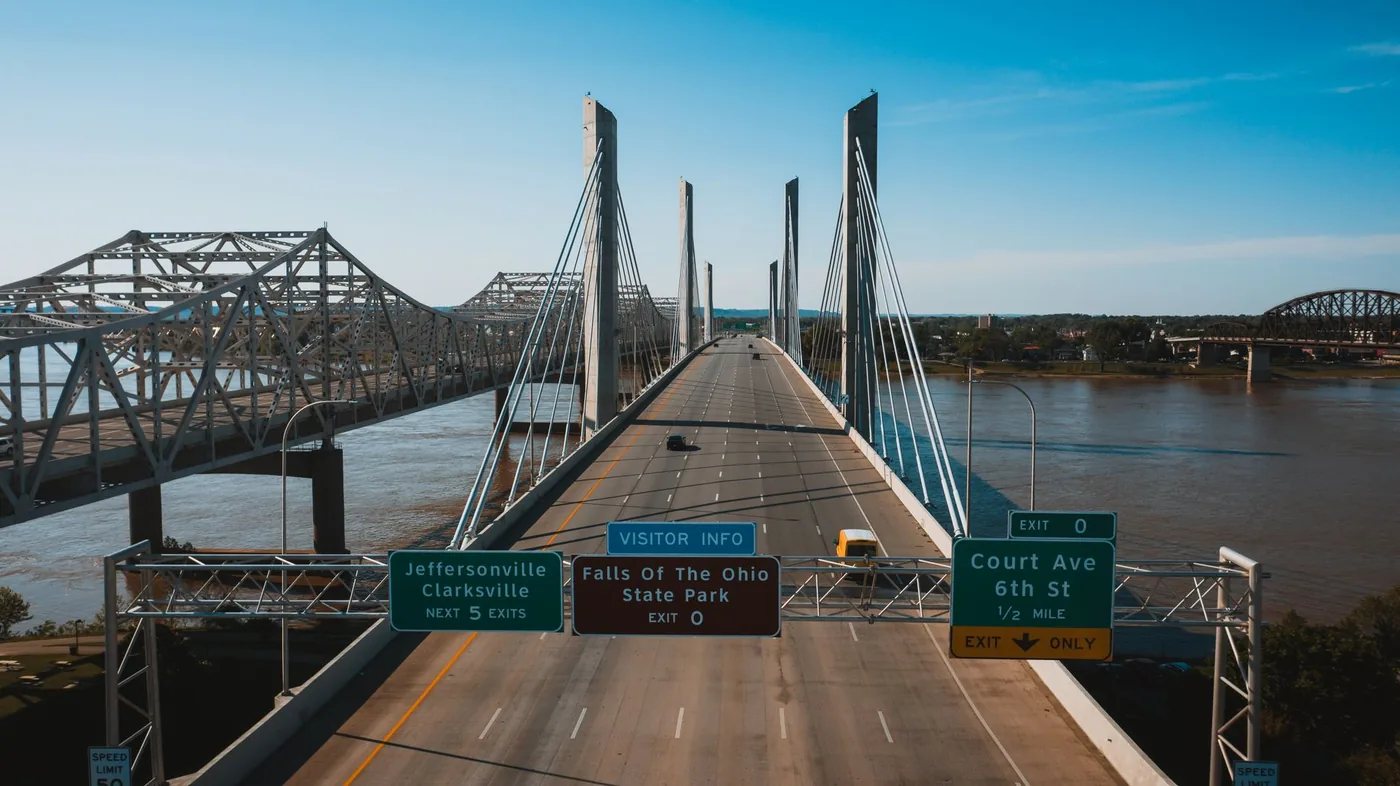
Louisville sits on the Ohio River, with Indiana on the north bank. Five bridges connect the two sides — three are tolled, two are free.
Tolled (RiverLink):
- Abraham Lincoln Bridge — I-65 northbound
- John F. Kennedy Memorial Bridge — I-65 southbound
- Lewis and Clark Bridge — the East End crossing, SR 265 / KY 841, both directions
Free:
- Sherman Minton Bridge — I-64
- Clark Memorial Bridge — US 31, into downtown
The free crossings typically add 10 to 20 minutes to a cross-river trip.
The transponder difference is large
RiverLink is all-electronic — no booths, no coin machines, no stopping. A transponder is not legally required, because pay-by-plate billing handles vehicles without one. But the price gap is significant.
Under the July 2026 rates, a passenger car pays roughly $2.79 with a transponder against about $5.57 pay-by-plate — near enough double for the same crossing.
RiverLink is E-ZPass compatible, and E-ZPass transponders from other states work here, including the Illinois I-PASS and the Indiana Toll Road E-ZPass. If you already carry one, you are covered.
Rates adjust annually and are indexed to inflation, so check RiverLink's current published rates rather than relying on a figure you read somewhere.
A warning worth passing on: RiverLink has publicly alerted customers to fraudulent text messages impersonating tolling agencies, claiming unpaid tolls and demanding immediate payment. This scam targets drivers nationwide, not just here. Do not click links in unsolicited toll texts — go to the operator's own site directly.
The practical decision: crossing north–south and want to avoid tolls? The I-64 Sherman Minton route is free. On a schedule at peak, or already carrying an E-ZPass? The tolled crossings are usually worth it.
Derby weekend
This is the one that catches people out.
The Kentucky Derby at Churchill Downs, in early May, draws one of the largest crowds of any US sporting event — and the surrounding Derby Festival runs for roughly two weeks beforehand with its own events, including a large fireworks display and a marathon that closes roads.
Traffic in and around Louisville during that period bears no relation to a normal week.
If your route crosses Louisville in late April or early May, check the calendar. It takes thirty seconds and it is the difference between an ordinary crossing and a day you will remember for the wrong reasons.
Timing
| Crossing time | What to expect |
|---|---|
| Before 6:30 a.m. | Clear |
| 7:00 – 9:00 a.m. | Morning peak |
| 10:00 a.m. – 3:00 p.m. | Best window |
| 3:30 – 6:00 p.m. | Worst window |
| After 6:30 p.m. | Clearing |
Louisville's peaks are moderate for a metro this size. The bridges concentrate delay more than volume creates it.
Weather
Winter ice is the significant hazard — the Ohio Valley gets freezing rain, and the bridge decks freeze before the road surfaces.
Spring severe weather — thunderstorms, hail and tornado risk between March and June.
Flooding. The Ohio River floods, and river-adjacent roads have closed in major events.
Fog in the river valley is common in autumn and can be dense.
Summer is humid rather than extreme.
If you are stopping
Services are plentiful at the interstate interchanges outside the centre. Also useful: Best time to leave Louisville · best time to leave Chicago to avoid traffic · restaurants on my route.
Kentucky operates rest areas and welcome centers along its interstates, with posted signs governing stays.
Plan ahead if you are heading south. Tennessee, the next state on I-65, does not allow overnight truck parking at its rest areas — roughly a two-hour limit, enforced. If you need a long overnight and you are heading toward Nashville, take it in Kentucky or Indiana.
Indiana, across the river, generally permits overnight parking with posted signs governing.
Continuing on?
North on I-65: Indianapolis, about 115 miles. South on I-65: Nashville, about 175 miles — and the Tennessee rest area rule. East on I-64: Lexington, then West Virginia. West on I-64: Evansville, then St Louis. Northeast on I-71: Cincinnati.
Before you drive
The toll decision and the Derby calendar are the two things worth checking. The traffic itself is manageable.
BoardSpy watches the crossings in real time, flags event days, and shows which bridge is moving before you commit to one.
Related drive-through guides
Along shared corridors: best time to drive through Nashville · best time to drive through Indianapolis.
Frequently asked questions
What is the best time to drive through Louisville?
Between 10:00 a.m. and 3:00 p.m., or after 6:30 p.m. Avoid 7:00 to 9:00 a.m. and 3:30 to 6:00 p.m.
Are the Louisville Ohio River bridges tolled?
Three of the five Ohio River crossings are tolled: the Abraham Lincoln Bridge (I-65 northbound), the John F. Kennedy Memorial Bridge (I-65 southbound), and the Lewis and Clark Bridge at the East End. The Sherman Minton Bridge (I-64) and Clark Memorial Bridge (US 31) are free, adding roughly 10 to 20 minutes. Tolling is all-electronic through RiverLink, which is E-ZPass compatible. Paying without a transponder costs roughly double.
How does Derby weekend affect traffic?
Substantially. The Kentucky Derby draws one of the largest crowds of any US sporting event, and the surrounding festival runs for roughly two weeks. Traffic in and around Louisville is severely affected on Derby weekend in early May.