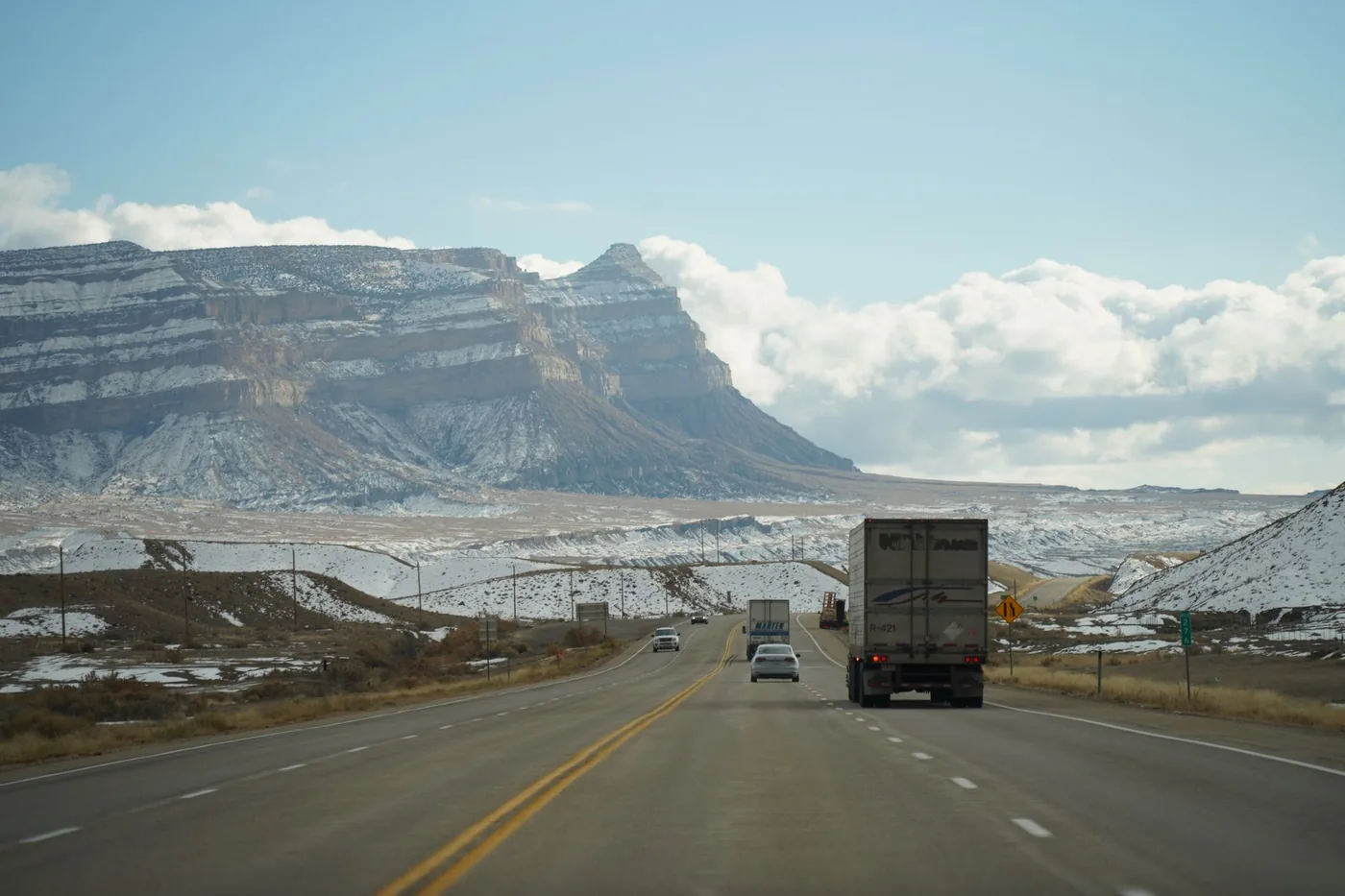
I-40 runs about 2,555 miles from Barstow, California to Wilmington, North Carolina, crossing eight states. It is one of the great American long-haul routes and one where the rest area rules shift dramatically as you go.
The western half is permissive. The eastern half is not. Knowing where that changes is the whole game.
The two rules that never change
Camping is prohibited at every rest area in every state. Sleeping in your vehicle is a separate thing and is widely allowed. But slide-outs, awnings, chairs and outdoor gear turn resting into camping, and that is banned nationwide.
Truck spaces are for trucks. When cars and RVs take commercial spaces, drivers with legal rest requirements end up on highway shoulders. It is a real safety problem, not an etiquette one.
Where you can actually sleep, west to east
California — roughly an 8-hour limit at rest areas. Enforced more consistently than in neighbouring states.
Arizona — one of the most permissive states on the route. Arizona DOT has no rules against overnight parking at rest areas and no restriction on length of stay. Camping and campfires are specifically prohibited.
New Mexico — up to 24 hours in any 3-day period. Generous, and the state frames it explicitly around keeping travellers rested.
Texas — the panhandle stretch through Amarillo. Around 24 hours, and Texas is widely regarded as one of the most truck-friendly states in the country.
Oklahoma — overnight parking generally permitted. Signs govern.
Arkansas — overnight parking at rest areas with no limitation on length of stay. Arkansas DOT publishes an interactive map showing each welcome center and rest area, whether it is open, and whether it has truck parking, an RV dump station, WiFi or propane. That map is worth bookmarking before an I-40 run.
Tennessee — this is the one to know about. Tennessee does not allow overnight truck parking at its rest areas. Drivers have reported being told by state DOT officers that the limit is two hours, statewide and enforced. If an officer believes you have been parked longer, they can check your log and issue a citation.
Do not plan a Tennessee overnight at a rest area. Use a truck stop.
North Carolina — overnight parking generally permitted at rest areas and welcome centers.
Rules change without notice. Posted signs at the facility override every guide, and the state DOT site is the authority.
The pattern worth internalising
I-40 gets less hospitable as you travel east. Arizona, New Mexico and Arkansas will let you sleep as long as you need. Tennessee will move you along after two hours.
That has a practical consequence for trip planning: if you are driving I-40 eastbound and expect to need a long overnight, take it before Tennessee, not after you are tired and already there.
Why it matters
Drowsy driving causes roughly 100,000 crashes a year, concentrated between midnight and 6 a.m. Rest areas exist specifically to reduce that number, and the states with the most generous limits are generally the ones with the longest empty stretches.
The Mojave section in California, the run across northern Arizona, and the New Mexico high desert all have long gaps between services. Those are exactly the places where skipping a stop because you want to make better time is the wrong call.
Rest area or truck stop?
Legally different things:
Rest areas are state DOT facilities governed by state administrative code. Free, time-limited, no camping.
Truck stops are private businesses setting their own rules. A truck stop in Tennessee can permit an overnight that a Tennessee rest area cannot.
On I-40, that distinction is the difference between a night's sleep and a 3 a.m. knock on the window.
What to expect at an I-40 rest area
Restrooms, vending, picnic tables, pet areas, and separated car and truck parking are standard. Welcome centers at state lines are typically the best facilities on the route, and several states along I-40 operate them.
Amenities vary widely by site. Some Arkansas and North Dakota facilities offer free WiFi; many western stops have dump stations. Checking the state DOT map beats assuming.
Before you leave
Facility closures, full lots at 1 a.m., and a state line you did not realise you had crossed are the three things that turn a planned stop into a problem.
BoardSpy shows the rest stops, fuel and food genuinely along your route as you drive it, filtered by real detour distance rather than straight-line proximity — so the next stop is one you can actually reach.
Related planning: restaurants on my route · best time to leave Los Angeles to avoid traffic.
Related BoardSpy guides
Frequently asked questions
Which I-40 states allow overnight rest-area parking?
Arizona has no overnight cap. New Mexico allows up to 24 hours in any 3-day period. Texas about 24 hours. Arkansas overnight with no stay limit. California about 8 hours. Oklahoma and North Carolina generally permit overnight; signs govern.
Can you sleep at a Tennessee rest area on I-40?
Do not plan a Tennessee overnight at a rest area. Tennessee does not allow overnight truck parking there. Drivers report a two-hour limit, enforced, with possible log checks and citations. Use a truck stop.
Does I-40 get stricter heading east?
Yes. Arizona, New Mexico and Arkansas will let you sleep as long as you need. Tennessee will move you along after about two hours. Take a long overnight before Tennessee if you are eastbound.
Is camping allowed at I-40 rest areas?
No. Camping is prohibited in every state. Sleeping in the vehicle is separate; gear outside the vehicle is camping.
Where can I check Arkansas I-40 rest area amenities?
Arkansas DOT publishes an interactive map of welcome centers and rest areas, including truck parking, dump stations, WiFi and propane.
References
Posted signs and operator timetables override this guide. Drive-time windows are pattern estimates, not measured figures for today.
- NHTSA: Drowsy Driving — NHTSA estimates drowsy driving is involved in about 100,000 crashes a year, concentrated overnight.
- Arizona DOT rest areas — Arizona rest-area information; no statewide overnight time cap.
- Arkansas DOT rest areas — Arkansas interactive rest-area map and overnight policy.
- Georgia DOT rest areas — Georgia rest-area locations and the statutory rest/sleep/eat protection.
- BoardSpy data sources — How leave-time recommendations use a saved route (limits disclosed).