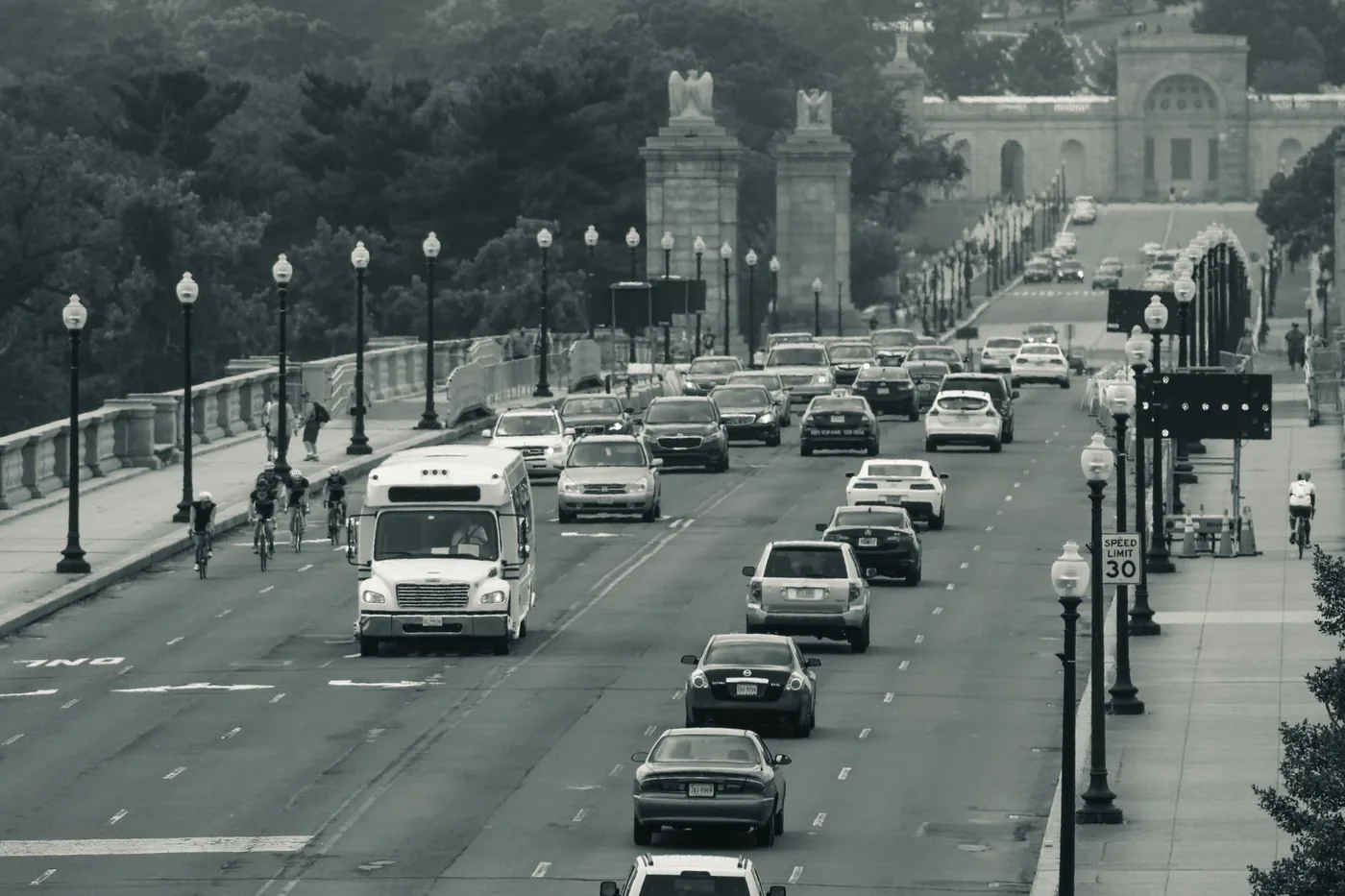
DC rush hour times
| Day | Morning peak | Evening peak | Worst 30 min | Best time to leave |
|---|---|---|---|---|
| Mon–Thu | 7:00–9:30 a.m. | 3:30–7:00 p.m. | Core of each peak window | Before 7:00 a.m. or after 9:30 a.m.; evening outside 3:30–7:00 p.m. |
| Friday | 7:00–9:30 a.m. | 3:30–7:00 p.m. (often stretches) | Friday evening outbound | Leave earlier than Mon–Thu when you can |
| Weekend | Lighter commute peaks | Event and Beltway surges vary | No fixed weekend commute clock on this page | Outside weekday peaks; still check your corridor |
When does DC traffic die down?
Morning traffic dies down after about 9:30 a.m.; evening traffic after about 7:00 p.m.; DC peaks start earlier and run longer than most cities.
Working nights changes which side of that window you drive on. A crew on the night block of a four on four off schedule that starts at 7 p.m. leaves just as the evening peak eases, then drives home at 7 a.m. straight into a morning peak that starts earlier here than in most cities.
DC-area commuters don't need convincing that the roads are rough — but the numbers are worth knowing, because they explain why timing your departure matters so much here. Here's how Washington traffic actually moves, which corridors are the worst, and how to find the best time to leave for your specific route.
DC drivers lose 70 hours a year to traffic
According to the 2025 INRIX Global Traffic Scorecard, the average DC-area driver lost 70 hours to congestion in 2025 — up from the year before — ranking the region 9th worst in the United States and 19th worldwide. INRIX puts the cost at roughly $1,289 per driver in wasted time and fuel (NBC4 Washington). The region's busiest corridor: I-295 in the District.
Seventy hours is close to two working weeks a year in traffic — which is exactly why a 20-minute shift in when you leave is worth taking seriously here.
When is DC traffic worst?
The region peaks twice: mornings roughly 7:00–9:30 a.m. heading toward the District and job centers, and evenings roughly 3:30–7:00 p.m. heading out — and DC's peaks start earlier and stretch longer than most cities'. The corridor matters as much as the clock:
- The Capital Beltway (I-495) — congestion stacks up well before and after the standard windows, and the American Legion Bridge between Maryland and Virginia is a chokepoint in both peaks.
- I-295 — INRIX's data flags it as the region's single busiest corridor.
- I-66 — the stretch between the Beltway and Fair Oaks is one of Northern Virginia's worst, and inside the Beltway the express-lane tolling changes the calculus by time of day.
- I-395 — heavy inbound in the morning; the express lanes reverse with the rush.
- The Dulles Toll Road / Greenway — the run between Hunter Mill Road in Reston and Claiborne Parkway in Ashburn is a named congestion hotspot in INRIX's regional data.
The simple move: shift off the peak
The most reliable way to beat it is to leave just before or just after the busiest window rather than in the middle. Even a 15–30 minute shift usually clears a large share of the delay, because the corridors thin out noticeably on either side of the peak. Against a 70-hour annual average, that habit claws back real time. The calculator can pin your departure to a fixed start time.
Three DC-specific things that move the peak
- The federal schedule. Telework policies, return-to-office waves, and even government shutdowns visibly change DC traffic — the region's congestion moves with the federal workforce in a way few cities' do.
- Express lanes and HOV rules. On I-66, I-395 and the Beltway express lanes, tolls and occupancy rules shift by time of day — the "best" time to leave can also be the cheapest.
- Events and motorcades. A Nats or Caps game, a demonstration on the Mall, or a motorcade can reshape downtown and bridge traffic with little warning. If your route crosses the core, the normal peak doesn't apply those days.
Why your best time is route-specific
General DC advice only goes so far, because the right departure time depends on your corridor, the day of the week, and today's conditions. The Beltway doesn't peak like I-66; a federal telework Friday isn't a Tuesday; and an event downtown rewrites the map. (Nationally, the worst day of the week varies by city too.)
Find the best time to leave for your DC route
Google Maps and Waze show live traffic and turn-by-turn once you are already on the road. BoardSpy is the leave-time app: it checks your saved DC route before you leave, recommends when to go, sends traffic and weather alerts, tracks delay and on-time stats (including best and worst days), and factors in weather along the way. When you set off, it opens your map app for turn-by-turn. For how routing apps differ from departure-timing tools, see best app to avoid traffic and Google Maps commute alternatives. For choosing the road itself, see how to find alternate routes — and if you're passing through hungry, where to eat driving through DC.
Just passing through?
This page is for commuters leaving Washington DC. If you are a road tripper crossing the metro on the interstate, see best time to drive through Washington DC instead.
Driving the I-95 corridor south? See the best time to leave Richmond to avoid traffic.
Nearby cities
Every metro is listed on Best time to leave by city.
Frequently asked questions
When does DC traffic die down?
Morning traffic dies down after about 9:30 a.m.; evening traffic after about 7:00 p.m.; DC peaks start earlier and run longer than most cities.
What is the best time to leave to avoid traffic in DC?
Generally, leave before 7:00 a.m. or after 9:30 a.m. in the morning, and outside 3:30–7:00 p.m. in the evening. DC's peaks run earlier and longer than most cities', so the exact best time depends on your corridor and day.
When is DC rush hour?
Roughly 7:00–9:30 a.m. inbound and 3:30–7:00 p.m. outbound — with Beltway congestion often stacking up before and after those windows.
How bad is DC traffic compared to other cities?
In the 2025 INRIX scorecard, the DC region ranked 9th worst in the US and 19th worldwide, with the average driver losing 70 hours a year — costing about $1,289 per driver in wasted time and fuel.
What is the worst road in the DC area?
INRIX flags I-295 as the region's busiest corridor. The American Legion Bridge on the Beltway, I-66 between the Beltway and Fair Oaks, and the Dulles Toll Road/Greenway stretch through Reston and Ashburn are also named hotspots.
Why is DC traffic so bad?
A dense job core, commuters converging from two states plus the District, river crossings that funnel everything onto a few bridges, and a federal schedule that swings demand. Congestion rose again in 2025 as more workers returned to offices.
How do I find the best time to leave for my DC commute?
Use a leave-time commute app that reads your actual route — not only a live map. BoardSpy recommends when to leave for your DC commute route, sends pre-departure traffic and weather alerts, and tracks on-time performance and best and worst traffic days. Download it at https://boardspy.site/apps/.