What hours is third shift?
Third shift is the overnight shift. You start late in the evening, work through the night, and finish the next morning. Here are the three versions you will see most:
| Third-shift hours | What it means for you |
|---|---|
| 11pm to 7am | The most common pattern. You hand over to the day shift at 7 and drive home as the morning rush is building. |
| 10pm to 6am | An earlier start and finish. Leaving at 6, you are often on the road before the worst of the morning traffic. |
| Midnight to 8am | A later start. Finishing at 8 puts your drive home near the busiest part of the morning peak. |
None of these is a legal standard. Your employer picks the clock, and an unpaid meal break can push your finish 30 minutes later. The Bureau of Labor Statistics counts a shift as a night shift when most of your hours fall between 9pm and 8am (BLS technical note), which takes in all three.
The name comes from splitting the day into three shifts. A 1985 BLS glossary defined third shift as a work period "scheduled to start at or near midnight" and listed graveyard and lobster as other names for it (BLS Monthly Labor Review).
Third shift vs first and second shift
Where a site runs around the clock, the day is usually split into three 8-hour shifts. The same BLS study put it this way: the second (evening) shift "generally ends at or near midnight, while the third (night) shift begins at this time" (BLS Monthly Labor Review). If you are weighing the afternoon option, see second shift hours for how that shift and its commute compare. If your nights come as part of a rotation through days and evenings, that is a rotating swing shift, which has its own sleep and commute problems.
| What changes | First shift | Second shift | Third shift |
|---|---|---|---|
| Typical hours | About 7am to 3pm | About 3pm to 11pm | About 11pm to 7am |
| You sleep | Night | Late night into morning | Daytime |
| You miss | Weekday daytime errands | Weeknight evenings | Daytime and some evenings |
| Drive in | Morning rush | Afternoon build-up | Quiet roads |
| Drive home | Evening rush | Quiet roads | Morning rush |
Exact times vary by workplace. Hospitals often run 7 to 3, 3 to 11 and 11 to 7. Plants and warehouses may start each shift an hour earlier or later.
Does third shift pay more?
It often does, through a shift differential. BLS describes this as "extra payment for working a schedule that varies from the norm," and gives night work as an example (BLS supplemental pay factsheet). It is usually a flat amount per hour or a percentage of your base rate.
- It is not required by federal law. The Department of Labor says extra pay for working night shifts "is a matter of agreement between the employer and the employee," and the Fair Labor Standards Act does not require it (DOL: Night Work and Shift Work). It depends on your employer, your union contract or your state.
- It raises your overtime rate. Federal overtime rules name "nightshift differentials" as pay that must go into your regular rate before overtime is worked out (29 CFR 778.207). If you are paid hourly and work over 40 hours, your time-and-a-half should be figured on base plus differential.
- Third shift usually pays more than second. In the BLS factory survey, third-shift premiums averaged 29.9 cents an hour, against 23.2 cents for second shift. Where the premium was a percentage, it averaged 10.0% for third shift and 7.3% for second (BLS Monthly Labor Review). Those figures are from 1984 manufacturing. They show the usual gap, not what employers pay today.
Pay matters more to people on nights than on evenings. In the latest BLS data, 17.5% of night-shift workers said better pay was their main reason for the schedule, against 6.3% of evening workers (BLS Table 8). We could not find a current national figure for the typical third-shift differential, so we are not quoting one. Ask what yours is before you accept, and check that it shows up on your pay stub.
What third shift does to your sleep and health
The hard part of third shift is not the hours at work. It is sleeping while everyone else is awake. NIOSH, the federal agency for worker safety, puts it plainly: working at night "goes against the human body's biology, which is hard-wired to sleep during the night and be awake and active during the day" (NIOSH: Sleep and Work).
A NIOSH study of a nationally representative sample of US workers found that night-shift workers had the highest risk of sleep problems (NIOSH: Shift Work and Sleep):
- Insomnia: 18.5% of night-shift workers, against 8.4% of daytime workers.
- Trouble falling asleep: 21.7%, against 12.7%.
- Feeling overly sleepy during the day: 22.3%, against 16.2%.
The same bulletin says too little or interrupted sleep is associated with risks to the immune system, diabetes, heart disease and other long-term health problems. That is a link found in research, not a promise that night work will make you ill. Many people work third shift for years and do well, especially when they protect their sleep.
What helps, from the same NIOSH guidance:
- Give yourself enough time to sleep after each shift, and make the room dark, quiet and cool. Blackout curtains earn their keep here.
- Take a long nap before your first night of a run.
- Cut caffeine several hours before you plan to sleep, and skip heavy food and alcohol right before bed.
- See a doctor if you keep struggling to sleep.
Days off are the other trap. If you switch back to a normal bedtime every weekend, the first night back feels like jet lag. Keeping roughly the same sleep window on your days off makes the week easier.
Who works third shift?
About 5.1 million wage and salary workers in the US usually work a night shift. That is 3.4% of them, according to BLS data for 2024-25 released in September 2026 (BLS Table 7, Table 8). The share is much higher in some jobs:
- Transportation and material moving jobs: 11.7% work nights. That takes in warehouses, freight and delivery.
- Production jobs: 7.9%.
- Transportation and utilities: 6.7% of workers in the industry.
- Leisure and hospitality: 6.5%.
- Manufacturing: 5.9%.
- Service jobs: 4.8%.
Unlike second shift, nights are not mainly a part-time pattern: 3.4% of full-time workers and 3.2% of part-time workers usually work nights (BLS Table 7). As for why, night workers most often named personal preference (30.7%), the nature of the job (19.8%), better pay (17.5%), or arrangements that suit their family (16.5%). Another 10.8% said they could not get another shift (BLS Table 8). Hospitals also run third shifts, but BLS does not split nurses out by shift in this release, so we are not putting a number on them.
The third-shift commute
Third shift is the mirror image of second shift. Your drive in is the easy one. Your drive home is the hard one, and it comes at the end of a night awake.
The drive in: empty roads
For an 11pm start on a 30-minute drive, you leave around 10:20 to 10:30pm. In most US cities the evening peak has drained by about 7pm (see rush hour times in the US), so you are driving on close to empty roads. Traffic is not the risk then. Road work is: highway crews often close lanes overnight because fewer people are driving, and a detour at 10:45pm can cost you more time than any traffic would.
The drive home: straight into the morning peak
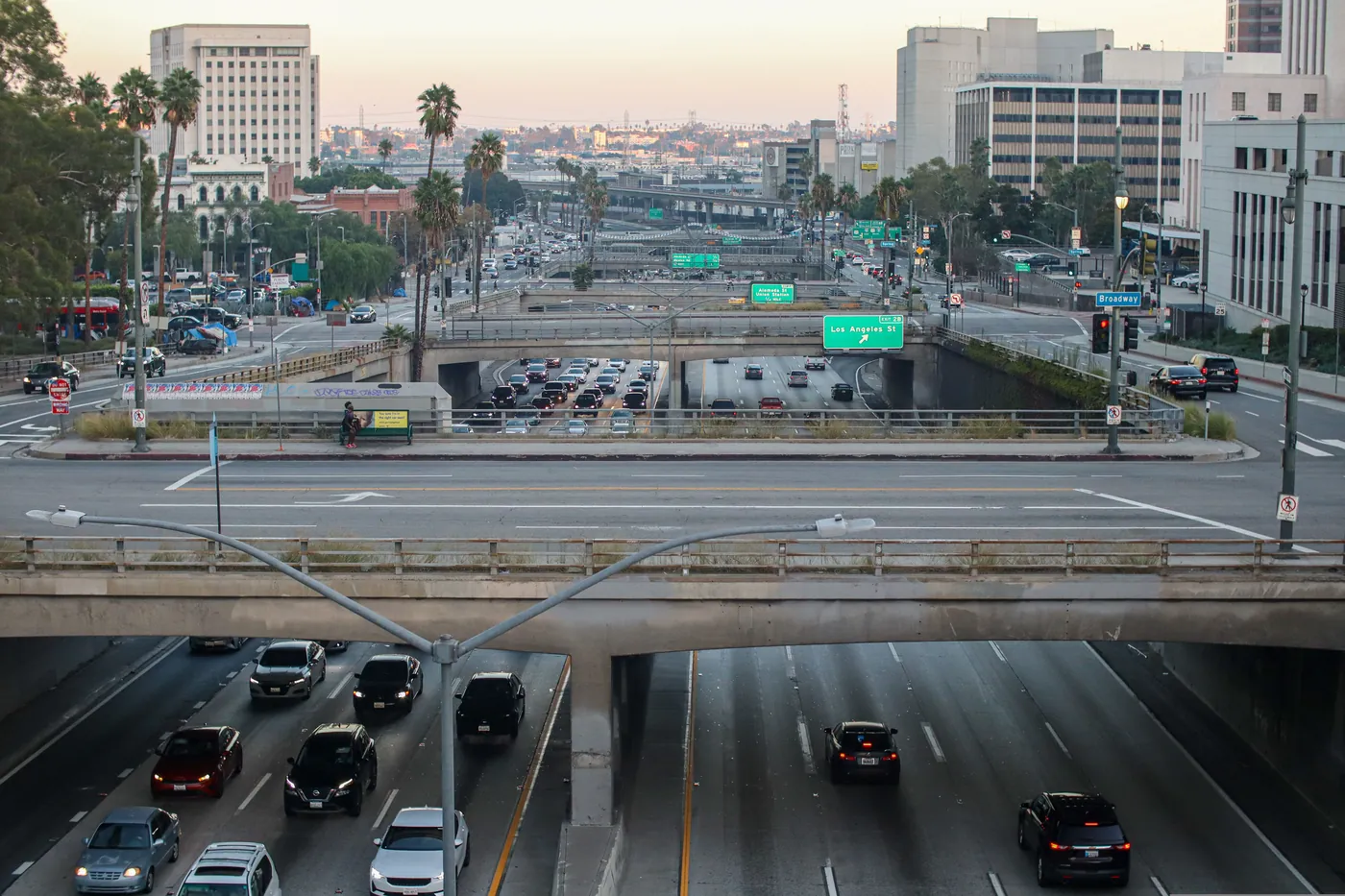
Your shift ends at 7. By the time you hand over and walk to your car it is 7:10 or 7:20. In most US cities the morning peak runs about 6:30 to 9:30am, so you pull out into the middle of it. School drop-off, delivery vans and everyone heading to a 7:30 or 8:00 start are on the road with you. The morning peak builds quickly around fixed start times, so leaving 10 minutes later one day than the next can change your drive a lot.
The same 30-minute drive you made at 10:30pm can take noticeably longer at 7:15am, and the difference changes from day to day with crashes, weather and school calendars. If your route runs against the main flow, say out of the city in the morning, you may miss the worst of it. Most routes still meet busy junctions and school zones.
You are also making this drive at the end of a night awake. NIOSH warns that crashes from drowsy driving can happen in the last few miles before you get home, and suggests a ride home or a nap at work when you are too sleepy to drive safely (NIOSH: Preventing crashes). A longer drive in heavy traffic is more time at the wheel when you are most tired.
Time the drive home to live traffic
Most third-shift workers set an alarm for the drive in and nothing for the drive home. The drive in barely changes from night to night. The drive home is the one that swings, because it lands in the morning peak.
BoardSpy times its alerts to live traffic on your route. Save your drive home as a route, and the leave-time alert tells you from live traffic how long the morning rush will take before you leave work, instead of you finding out on the highway. Add your shifts and the leave-by alarm for the drive in is timed to live traffic too. Then BoardSpy hands you off to your usual map app for the drive.
- Save your drive home as a route: work to home, leaving around the time your shift ends, on the days you work.
- Add your shifts, one-off or a repeating rotation in the shift calendar, so the drive in has a leave-by alarm too.
- Choose a lead time. Each alert then fires from live traffic on that route.
Free to try on iPhone and Android. See pricing for what each plan includes, including how many routes you can save, or get the app.
Keep your third shift on a calendar
If your third shift is the same five nights every week, any phone calendar handles it. It gets harder when you rotate between nights and days, or work 12-hour nights on a pattern like 4 on, 4 off.
- The free shift calendar maker draws a full year of a repeating pattern that you can print or import as an .ics file.
- If you work 12-hour nights, the 12-hour shift schedules guide compares the common rotations.
- If you want your shifts, the people at home, and a leave-by alarm in one app, compare the options in the best shift work calendar apps.
Frequently asked questions
What are 3rd shift hours?
3rd shift hours are usually about 11pm to 7am. Common versions are 10pm to 6am and midnight to 8am. Your employer sets the exact start and end, so check your offer or posted schedule.
What is 3rd shift?
3rd shift is the overnight shift that follows second shift. You start late in the evening and finish the next morning. BLS counts it as a night shift: most of your hours fall between 9pm and 8am.
What time does third shift start and end?
Third shift usually starts between 10pm and midnight and ends between 6am and 8am the next morning. An unpaid meal break can push your finish about 30 minutes later. Your employer decides which hours you work.
How is third shift different from first and second shift?
First shift is the day shift, often about 7am to 3pm. Second shift runs about 3pm to 11pm. Third shift is overnight, about 11pm to 7am, so you sleep in the daytime. Exact times vary by workplace.
Does third shift pay more?
Often, and usually more than second shift where both carry a premium. Federal law does not require extra pay for night work, so it depends on your employer, union contract or state. Ask what the differential is before you accept.
Is the drive home from third shift in rush hour?
Usually, yes. In most US cities the morning peak runs about 6:30 to 9:30am, so leaving work just after 7am puts you in the middle of it. The drive in around 10:30pm is usually on near-empty roads.