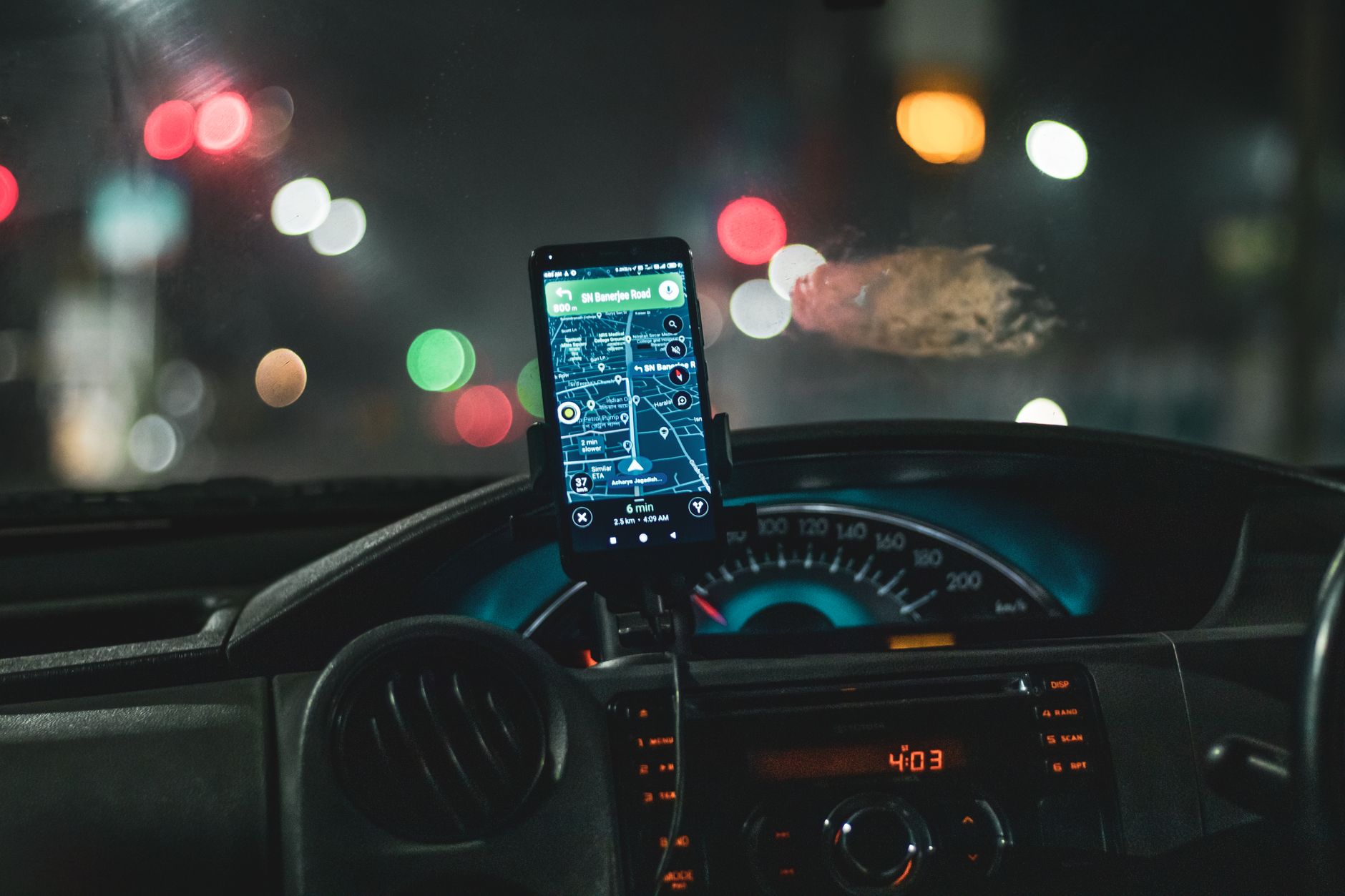
Getting the right one matters, because they answer different questions.
The three distances
Straight-line distance — “as the crow flies.” What a map measures between two points, ignoring roads entirely.
Road distance — the actual miles you drive along the route you take.
Time distance — how long the trip takes.
Straight-line distance is almost always the wrong number
Rivers, rail corridors, freeway access points and mountains all mean that the road does not go where the crow does.
Where the gap gets extreme:
- Cities on water — a bay, river or harbour between you and work can mean a five-mile straight line becomes a twenty-mile drive to the nearest crossing
- Grid-broken cities — where freeways and rail lines force long detours to a crossing point
- Hills and mountains — where the road follows a valley rather than the line
In a city with real geographic barriers, straight-line distance can understate a commute by 40% or more.
Where it is still useful: rough filtering. If you are looking at property listings, straight-line distance tells you what to rule out. It does not tell you what to rule in.
Road distance is what you want for cost
Use road distance when you are calculating money:
- Fuel consumption
- Vehicle wear and depreciation
- Mileage reimbursement, where applicable
One tax point worth stating plainly, because it is the most common misunderstanding: commuting between home and a regular work location is not deductible at any distance under IRS rules. That is a personal expense, not a business one. The main exception is where a qualifying home office makes your home itself a work location.
We cover the mileage rules and the 2026 IRS rates — including the rare mid-year change — in a separate guide.
Time distance is what you want for everything else
For quality of life, time is the number that matters, and it is not proportional to distance.
A twelve-mile urban commute crossing a bridge can take longer than a forty-mile rural one. Twelve miles through a metro with a chokepoint runs at an effective speed of maybe fifteen miles an hour; forty miles of open interstate runs at seventy.
Two commutes with wildly different mileage can consume identical hours of your life.
And time distance is not one number. It is a range — typically thirty minutes wide on an urban corridor, depending on when you leave.
How to measure yours properly
1. Measure the route you actually drive, not the one a map suggests. If you take a different road because you know the direct one backs up, measure that road.
2. Measure both directions. They frequently differ. One-way systems, different exit access, and traffic direction asymmetry mean the return trip can be a different distance and usually a different duration.
3. Record time across a full week, not once. A single measurement tells you nothing about the range, and the range is the useful part.
4. Note your best and worst. The gap between them is the thing you can actually attack, and on most corridors it is twenty to thirty minutes.
When distance genuinely matters
Vehicle choice. A 15,000-mile-a-year commute changes the calculation on fuel economy, servicing intervals and whether an EV makes sense.
Where to live. Though time-distance and direction matter more — a home ten miles further out on the light side of a directional peak can mean a shorter commute than one closer in on the heavy side.
Cost calculations. Fuel, wear, tolls and parking all scale with miles rather than minutes.
The number most people should track
If you only track one thing, track the range of your door-to-door time, not the distance.
Distance is fixed and tells you nothing new after the first measurement. Time varies, and the variation is where the hours of your life are going.
Before you leave
Distance is a fixed number. Time is not, and it is the one you can change.
BoardSpy tracks your actual route and tells you before you leave what today’s trip will cost in the currency that matters — with live conditions and weather on the road ahead.
Distance alone understates delay. Check a metro leave window such as the best time to leave DC to avoid traffic, or compare Waze alternatives.
Frequently asked questions
How do I measure the distance from home to work?
Use road distance along the route you actually drive, not straight-line distance. Straight-line distance ignores rivers, rail lines and freeway access, and can understate a real commute by 40 percent or more in a city with geographic barriers.
Does commuting distance affect my taxes?
No. Driving between home and a regular work location is commuting and is not tax deductible at any distance under IRS rules. The main exception is where a qualifying home office makes your home a work location.
Is distance or time the better measure of a commute?
Time, in almost every case. A 12-mile urban commute crossing a bridge can take longer than a 40-mile rural one. Distance only becomes the right measure when you are calculating fuel or mileage costs.