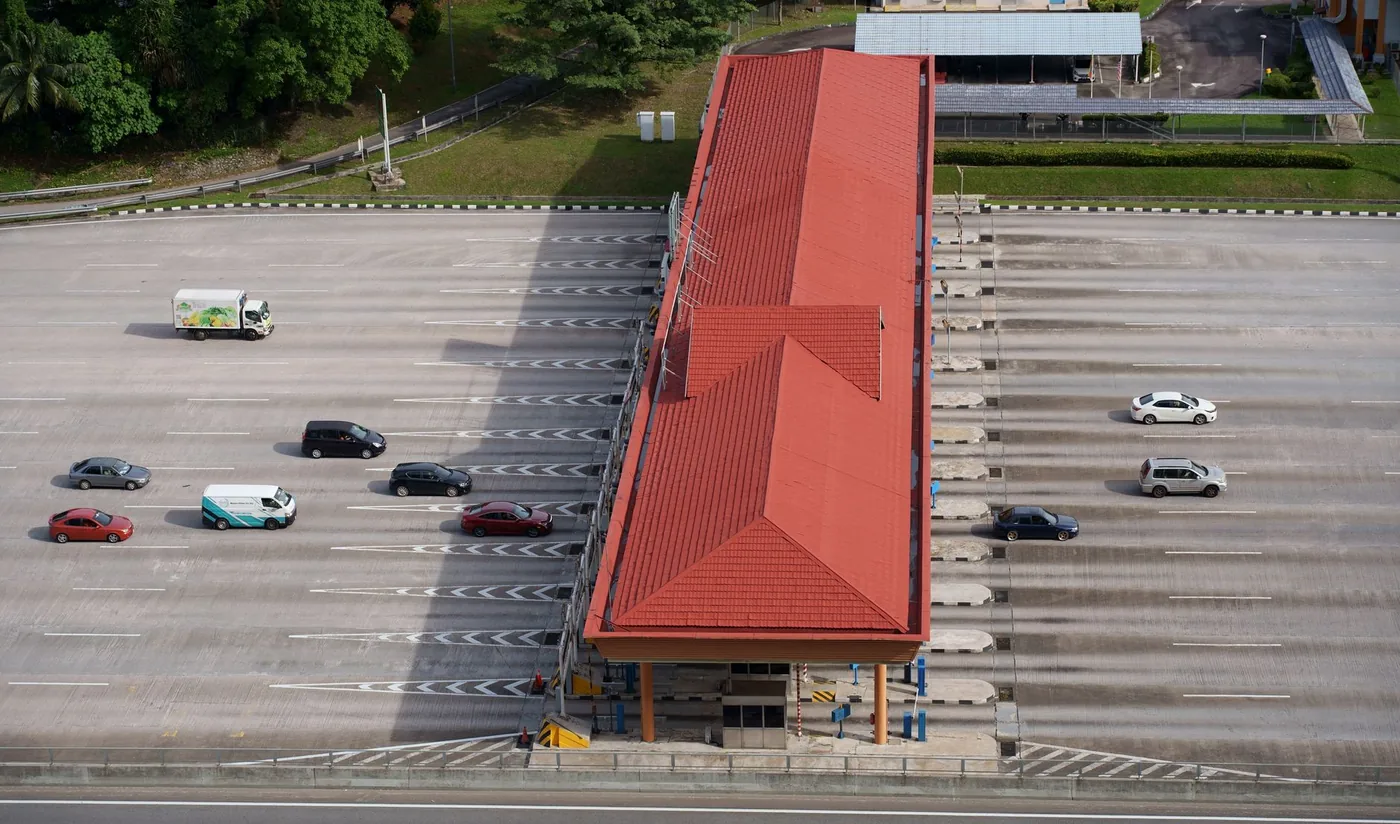
If you have been told you cannot park overnight in a state, and then find a facility on that state's turnpike where you can — this is why.
Toll road service plazas are frequently governed by different rules from ordinary state rest areas, and on some of the most restrictive corridors in the country, they are the only legal overnight option. Broader overnight map: interstate rest stops.
The distinction
State rest areas are highway facilities managed by state Departments of Transportation under state administrative codes. Free to enter, time-limited, camping banned.
Toll road service plazas are operated by turnpike or toll authorities, which are frequently separate entities from the state DOT. They typically have fuel, full restaurants, and staff — and their rules are set by the authority, not the state's rest area regulations.
That gap is where the useful exceptions live.
The clearest example: Ohio
Ohio does not allow overnight camping at its rest areas.
But eight service plazas on the Ohio Turnpike do accept overnight stays, including RVs up to 40 feet.
Same state, two completely different answers, decided by whether you pull into a rest area or a turnpike plaza. If you need an Ohio overnight, the Turnpike is where you go.
The New York version
New York draws a similar line, though not on a toll road specifically.
Ordinary state rest areas — restrooms and vending only — have a two-hour limit.
Welcome centers — the staffed facilities with restaurants and shops — permit overnight parking.
The signage does not make this obvious from the road, and it is the single most useful thing to know about stopping in New York.
Delaware
Delaware has only two rest areas in the entire state, and both are capped:
- Six hours at the Highway 1 facility
- Eight hours at the I-95 Welcome Center truck and RV parking lot
Camping is prohibited at both. On a state this small with this much through-traffic, knowing the limits matters. East Coast corridor: rest stops on I-95.
Where this matters most
The states with the tightest rest-area rules are concentrated in the northeast, and they are also the states with the busiest toll roads.
| State | Rest area limit | Toll road alternative |
|---|---|---|
| New Jersey | ~2 hours | New Jersey Turnpike service areas |
| Pennsylvania | ~2 hours | Pennsylvania Turnpike service plazas |
| Ohio | No overnight camping | 8 Turnpike plazas accept overnight |
| New York | 2 hours (rest areas) | Thruway service areas; welcome centers |
| Illinois | 3 hours | Illinois Tollway oases |
Verify with the specific authority before relying on it. Turnpike and tollway rules are set by the operating authority and change without notice. The Ohio Turnpike's eight-plaza permission is documented; others may or may not offer the same, and posted signs at the facility always win. Cross-country contrast: rest stops on I-80.
What service plazas offer that rest areas do not
Fuel. Ordinary rest areas almost never have it. Service plazas usually do.
Full food service. Restaurants and branded outlets rather than vending machines.
Staff. Someone is there, which changes the security picture, particularly overnight.
Direct mainline access. On most turnpikes you never leave the toll road, so there is no exit-and-re-enter penalty and no second toll.
That last point is worth real money on a long haul. Leaving a toll road to find fuel and returning can cost more than the fuel price difference.
What they cost
Service plaza fuel and food are typically priced above what you would find at an exit a few miles away. You are paying for the convenience of not leaving the road.
On a long drive with a schedule, that is usually worth it. On a leisurely trip, taking an exit is cheaper.
The rules that still apply everywhere
Camping is prohibited at every rest area and, in practice, at service plazas too. Sleeping inside your vehicle is a different legal category. Slides out, awnings, chairs, gear or cooking crosses the line.
Truck spaces are for commercial trucks. This matters more at service plazas than at ordinary rest areas, because turnpikes carry heavy freight and the plazas are where drivers with mandatory rest requirements go. When passenger vehicles and RVs take those spaces, drivers end up on shoulders. See truck rest stops.
Planning around the northeast
If you are driving I-95 or I-80 through the northeastern states, the practical plan is:
Short breaks → ordinary rest areas, anywhere.
Fuel and a proper meal → service plazas, without leaving the road.
A genuine overnight → an Ohio Turnpike plaza, a New York welcome center, or a truck stop off the highway. Do not plan one at a New Jersey or Pennsylvania rest area.
Why the restrictions exist, and their cost
Drowsy driving causes roughly 100,000 crashes a year, concentrated between midnight and 6 a.m.
The tension on toll corridors is obvious: the states with the shortest limits carry the heaviest traffic. Service plazas exist partly to relieve that, which is why the more permissive rules tend to sit with the toll authorities rather than the DOTs.
Before you leave
The facility ahead may be a rest area or a service plaza, and they are not the same thing legally — which you cannot tell from a mile marker.
BoardSpy shows the stops actually along your route as you drive it, so you know what is coming and whether it is the kind of stop you need.
Related BoardSpy guides
- Interstate rest stops: US overnight rules
- Truck rest stops overnight parking
- Rest stops on I-80
- Rest stops on I-95
Frequently asked questions
Are toll road rest stops the same as state rest areas?
No. State rest areas are DOT facilities under administrative code. Toll road service plazas are operated by turnpike or toll authorities, which often set different rules — and usually have fuel and restaurants.
Can you stay overnight at Ohio Turnpike rest stops?
Eight Ohio Turnpike service plazas accept overnight stays, including RVs up to 40 feet. Ordinary Ohio rest areas do not allow overnight camping. Same state, two different answers.
Can you overnight at New Jersey or Pennsylvania rest areas?
Plan on about two hours at ordinary rest areas. Do not plan a genuine overnight there. Use a turnpike service plaza if the authority permits it, a New York welcome center, or a truck stop off the highway.
Do New York rest areas and welcome centers have the same rules?
No. Ordinary rest areas with restrooms and vending are about two hours. Welcome centers — staffed, with restaurants and shops — permit overnight parking.
Do service plazas have fuel and food?
Usually yes — that is the main difference from ordinary rest areas. Fuel and food are typically priced above an exit a few miles away. You are paying for not leaving the toll road.
References
Posted signs and operator timetables override this guide. Stay limits are pattern summaries of state DOT rules, not a substitute for the sign at the facility.
- NHTSA: Drowsy Driving — NHTSA estimates drowsy driving is involved in about 100,000 crashes a year, concentrated overnight.
- Ohio Turnpike service plazas — Eight Turnpike plazas that accept RVs overnight, unlike ordinary Ohio rest areas.
- NYSDOT rest areas and welcome centers — New York distinguishes welcome centers (overnight) from ordinary rest areas (~2 hours).
- N.J. Admin. Code § 19:9-1.6 — New Jersey Turnpike Authority parking time limits, including the ~2-hour rest-area rule.
- Ill. Admin. Code tit. 92 § 533.20 — Illinois rest-area stop shall not exceed three hours, and may be reduced when capacity is approached.
- 23 CFR § 752.5 — Safety rest areas — Federal rule defining Interstate safety rest areas and limiting petroleum sales at those sites.
- BoardSpy data sources — How leave-time recommendations use a saved route (limits disclosed).