About 95 miles. Ninety minutes if everything goes right, and two to three hours if it does not.
The distance is easy. Getting out of Manhattan and paying for it at the other end is the part worth planning.
The numbers
| Feature | |
|---|---|
| Distance | ~95 miles city centre to city centre |
| Drive time, free-flow | ~1 hr 30 |
| Realistic | 2 – 3 hr |
| Main route | New Jersey Turnpike (I-95) |
| Alternative | I-78 / US 1, or Garden State Parkway |
The route
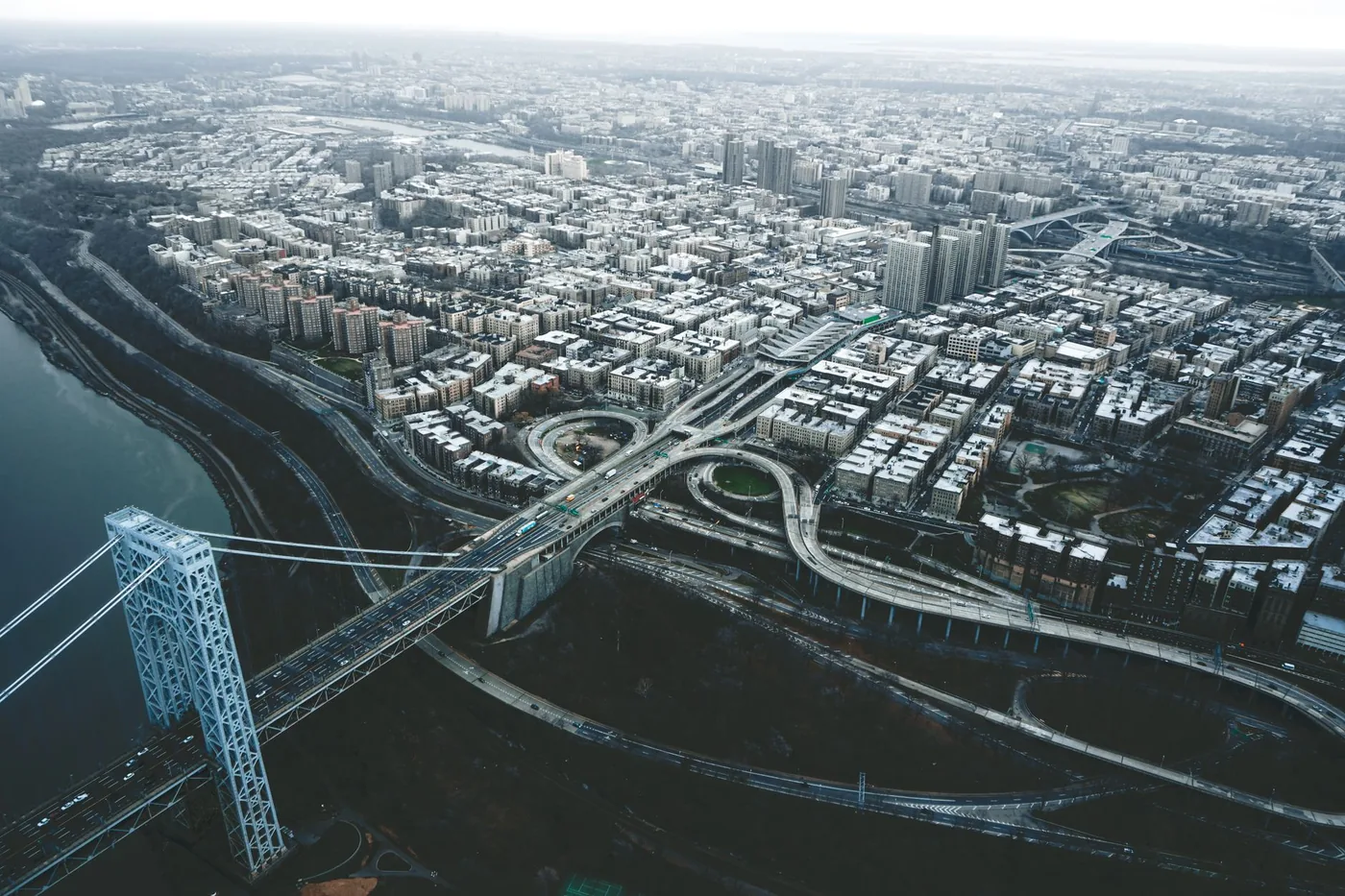
Out of Manhattan: the Lincoln Tunnel, the Holland Tunnel, or the George Washington Bridge, depending on where in the city you start. All three are chokepoints with unpredictable queues.
Then: the New Jersey Turnpike south, which is the main run and generally moves well outside peak.
Into Philadelphia: I-95 south, or the Ben Franklin Bridge if you are approaching from the New Jersey side.
There is no route that avoids the Hudson crossing. That is the corridor's defining constraint.
Where the time actually goes
Break the trip into three parts and the picture becomes clear.
The Manhattan exit (0–10 miles): the most variable part of the journey by a wide margin. Tunnel queues range from a few minutes to over an hour with little pattern. Westbound in the evening between 4 and 7 p.m. is the worst regular condition on the whole corridor.
The Turnpike (10–85 miles): genuine highway. Usually the fastest and most predictable section.
The Philadelphia approach (85–95 miles): moderate. Nothing like the Manhattan end.
The practical consequence: your departure time out of Manhattan matters far more than anything else about this trip.
Tolls and parking — the real cost
This is where driving loses to rail for a lot of trips.
Tolls: the Hudson crossing plus the full length of the New Jersey Turnpike adds up to a substantial figure each way.
Parking: Philadelphia centre-city parking is expensive, and Manhattan parking is expensive enough that for a day trip it can exceed the cost of two Amtrak tickets on its own.
For one person making a day trip, driving is frequently the most expensive option as well as the least predictable. For a group of three or more with parking at both ends, the maths flips.
When to go
| Departure from Manhattan | Typical duration |
|---|---|
| Before 6:00 a.m. | ~1 hr 30 |
| 6:30 – 9:30 a.m. | 2 hr – 2 hr 30 |
| 10:00 a.m. – 2:30 p.m. | 1 hr 40 – 2 hr |
| 3:00 – 7:00 p.m. | 2 hr 30 – 3 hr |
| After 7:30 p.m. | ~1 hr 40 |
Friday afternoon is the worst regular slot — the evening peak starts around 2 p.m., stacks with weekend shore traffic, and does not clear until well after 7.
Sunday evening northbound is the corresponding return problem.
Where to stop
The New Jersey Turnpike has service areas at regular intervals, which is one of its genuine advantages — you never need to leave the road.
Molly Pitcher and Woodrow Wilson service areas sit in the middle stretch and are the natural break points. Both have fuel, food and restrooms directly off the mainline.
Ninety-five miles rarely demands a stop, but a Turnpike service area is a useful scheduling tool if you are on track to hit a bad window at the far end.
The rail alternative
This is a corridor where the train genuinely beats driving for most centre-to-centre trips.
Amtrak Acela — roughly 1 hour 5 minutes, 30th Street to Penn Station. Amtrak Northeast Regional — roughly 1 hour 20, considerably cheaper. NJ Transit + SEPTA via Trenton — around 2 hours 15, the budget option, no advance booking.
All three land centrally at both ends. Against a variable 90-to-180-minute drive plus tolls plus parking, the case is straightforward.
Full comparison in our dedicated mode guide for this corridor.
Weather
Winter storms produce severe Turnpike delays and tunnel backups. Nor'easters can shut the roads entirely.
Summer thunderstorms flood low sections of I-95 in New Jersey.
Fog in the Meadowlands and along the Delaware can be dense.
The trains keep running through most of it, which is the quiet argument for taking one whenever the forecast is bad.
The reverse trip
Philadelphia to New York has the same distance and a different problem: instead of a tunnel queue at the start, you get one at the end, arriving into Manhattan.
Best departures from Philadelphia: before 6:30 a.m., or between 9:30 a.m. and 2:00 p.m. Avoid arriving into Manhattan between 4 and 7 p.m. if you have any choice.
Before you leave
Ninety-five miles where ten of them are unpredictable and eighty-five are fine. The Hudson crossing is the whole variable.
BoardSpy watches the tunnel and bridge queues and the Turnpike in real time, and tells you before you leave what today's crossing actually costs — with live weather on the route.
Related BoardSpy guides
- Philadelphia to New York: bus, train or drive
- Drive time from Washington DC to New York
- Best time to leave in New York
Frequently asked questions
How far is New York to Philadelphia?
About 95 miles city centre to city centre. Free-flow is about 1 hour 30 minutes. Realistic driving is 2 to 3 hours because of the Hudson crossing. Pattern estimates, not live times.
Where does the time actually go?
The Manhattan exit (Lincoln/Holland Tunnel or George Washington Bridge) is the most variable stretch. The New Jersey Turnpike is usually the fastest section. The Philadelphia approach is moderate.
When is the worst time to drive New York to Philadelphia?
Leaving Manhattan 3:00–7:00 p.m., especially Friday afternoon. Before 6:00 a.m. is closest to free-flow. Sunday evening is the corresponding northbound return problem.
Is the train faster than driving?
Usually yes for centre-to-centre. Acela is about 1 hour 5 minutes; Northeast Regional about 1 hour 20. Against a 90-to-180-minute drive plus tolls plus parking, the train is the default.
Do tolls and parking change the maths?
Yes. The Hudson crossing plus the Turnpike is substantial each way, and Manhattan parking for a day trip can exceed two Amtrak tickets. Groups of three or more with parking at both ends can flip it.
References
Posted signs and operator timetables override this guide. Drive-time windows are pattern estimates, not measured figures for today.
- Amtrak — Northeast Corridor schedules for Acela and Regional between Penn Station and 30th Street.
- New Jersey Turnpike Authority — Turnpike routing, tolls and service areas.
- BoardSpy data sources — How leave-time recommendations use a saved route (limits disclosed).